Table of Contents
TogglePortland’s tiny home market has exploded in the past few years, driven by sky-high housing costs, progressive zoning reforms, and a culture that embraces minimalism and sustainability. Whether you’re downsizing, looking for an affordable entry into homeownership, or planning an accessory dwelling unit (ADU) for rental income, Portland offers one of the most diverse tiny home markets in the country. But navigating the options, from permitted ADUs to mobile units on trailers, requires understanding local regulations, pricing realities, and where to actually find these compact dwellings. This guide cuts through the noise and delivers what buyers need to know in 2026.
Key Takeaways
- Tiny homes for sale Portland range from $50,000 to $300,000+ depending on whether you choose a wheeled structure or a foundation-built ADU, with strong demand driven by high median home prices around $575,000.
- Portland’s 2020 zoning reforms eliminated owner-occupancy requirements and allow up to four units on most residential lots, making it one of the most permissive cities for tiny home development in the country.
- Foundation ADUs are permanent, can be financed with traditional mortgages, and generate rental income ($1,200–$1,800/month), while tiny houses on wheels offer flexibility but face financing and resale challenges.
- Local builders like Tiny Heirloom and Wishbone Tiny Homes provide turnkey options, and specialized real estate agents familiar with ADU regulations can save buyers months of permitting headaches.
- Foundation tiny homes must meet Oregon Residential Specialty Code requirements including egress windows, minimum ceiling heights, and utility connections, with permits typically taking 6 to 12 months.
- Tiny homes in Portland commonly feature eco-friendly systems like mini-split HVAC, rainwater collection, solar pre-wiring, and composting toilets, reflecting the region’s sustainability-focused culture.
Why Portland Is a Tiny Home Hotspot
Portland’s tiny home boom didn’t happen by accident. The city’s median home price now hovers around $575,000, pricing out first-time buyers and pushing creative housing solutions to the forefront. Add to that Portland’s 2020 residential infill reforms, which relaxed ADU restrictions and eliminated owner-occupancy requirements, and you’ve got a regulatory environment that actually encourages compact living.
The city’s environmental ethos plays a role, too. Portlanders tend to embrace smaller footprints, both literal and carbon. Many tiny home builders in the region use reclaimed lumber, locally sourced materials, and energy-efficient systems like mini-split heat pumps and composting toilets. It’s not just about affordability: it’s about alignment with values.
Another factor: land availability. Portland’s urban growth boundary keeps the metro area compact, but that same constraint makes backyard ADUs and urban tiny homes attractive. A 400-square-foot ADU on an existing lot can generate rental income or house aging parents without the headache of buying a second property. Zoning changes now allow up to four units on most residential lots, making tiny homes a strategic piece of multi-generational or investment planning.
Types of Tiny Homes Available in Portland
Tiny Houses on Wheels
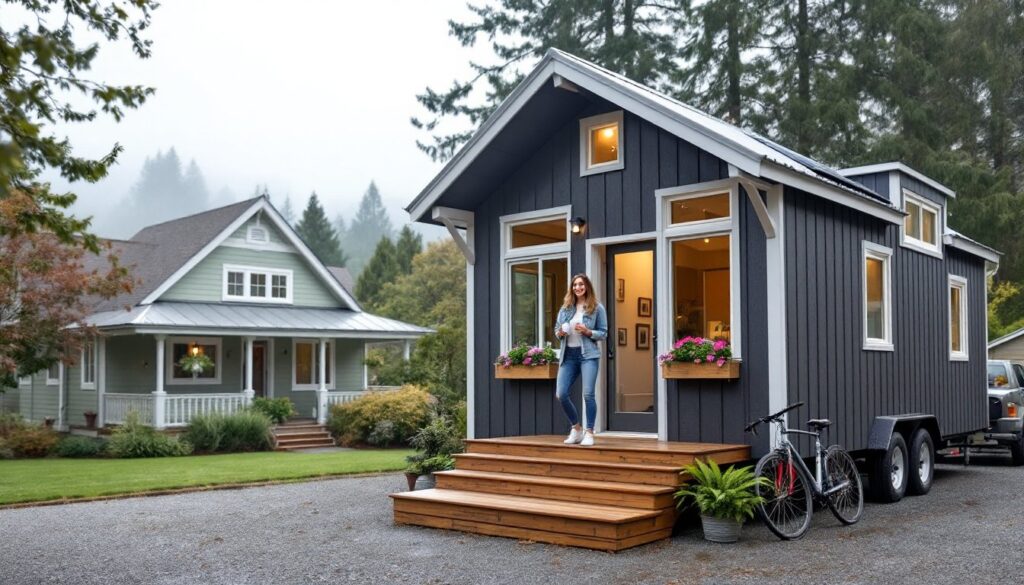
These are the most recognizable tiny homes, compact structures built on double-axle or triple-axle trailers, typically ranging from 100 to 400 square feet. Legally, they’re classified as RVs in most jurisdictions, which means they don’t require a foundation or traditional building permits. But, that also means parking and occupancy are governed by RV codes, not residential zoning.
In Portland, tiny houses on wheels can be parked in designated RV parks, on private property with the owner’s permission (subject to local zoning), or in certain mobile tiny home communities. Builders like Tiny Heirloom and Wildwood Tiny Homes (both based in the Portland metro) offer turnkey models starting around $70,000 for basic builds and climbing to $150,000+ for high-end finishes, lofts, and off-grid systems.
One caveat: securing tiny home loans can be tricky. Most conventional mortgages don’t apply to structures on wheels, so buyers often rely on personal loans, RV financing, or cash purchases. Resale can also be a challenge, as the market is smaller and resale values depend heavily on condition, builder reputation, and mobility.
Foundation Tiny Homes and ADUs
These are permanent structures built on a foundation, typically ranging from 400 to 800 square feet. In Portland, most are classified as ADUs, accessory dwelling units, and must comply with the Oregon Residential Specialty Code (ORSC), which is based on the International Residential Code (IRC).
Foundation tiny homes require building permits, inspections, and adherence to code minimums: 150 square feet for one occupant, plus 100 square feet for each additional person. They must also meet egress requirements (windows large enough for emergency exit), ceiling height minimums (typically 7 feet in habitable rooms), and energy code standards.
Cost varies widely. Prefab ADU companies like Dweller and Abodu offer models starting around $150,000 (not including site prep, utilities, or permits). Custom tiny homes built by local contractors can run $200,000 to $300,000+, depending on finishes and site complexity. But, these units can be financed with traditional mortgages if they’re on owned land, and they add real value to the property.
ADUs also open up rental income potential. Portland’s rental market is strong, and a well-appointed 500-square-foot unit can rent for $1,200 to $1,800/month, depending on location and amenities.
Where to Find Tiny Homes for Sale in Portland
The Portland tiny home market is fragmented, so buyers need to cast a wide net. Here’s where to look:
Local builders and manufacturers: Companies like Tiny Heirloom, Wishbone Tiny Homes, and Caravan Tiny House Hotel (which also sells models) are based in or near Portland. Buying local means you can tour finished units, meet builders, and avoid cross-country shipping fees.
Online marketplaces: Websites like Tiny House Listings, Tiny Home Builders, and even Craigslist regularly feature Portland-area units. Be cautious with used models, inspect for water damage, trailer integrity, and code compliance. Bring a contractor or inspector if you’re not confident assessing structural condition.
ADU developers: For foundation units, check out prefab companies like Dweller, Abodu, and Node. They handle permitting, site prep, and installation, though you’ll pay a premium for the convenience.
Tiny home communities: Portland has several micro-housing developments, such as Kenton Women’s Village and Hazelnut Grove (primarily for transitional housing), but a few private communities like tiny home communities in the metro area offer lots for lease or purchase with units included. This model is growing, especially in suburbs like Gresham and Hillsboro.
Real estate agents specializing in tiny homes and ADUs: A handful of Portland Realtors focus on alternative housing. They can help navigate zoning, financing, and resale considerations. According to Curbed, agents familiar with ADU regulations can save buyers months of headaches.
What to Expect: Pricing and Features
Portland tiny home prices reflect the city’s high cost of living and strong demand. Here’s a realistic cost breakdown as of 2026:
Tiny houses on wheels: $50,000 to $150,000+. Budget builds (often DIY or shell-only) start around $50K. Mid-range models with appliances, lofts, and modest finishes run $80K to $100K. High-end, custom units with hardwood floors, tile showers, and smart home tech can exceed $150K.
Foundation ADUs: $150,000 to $300,000+. This includes the structure, foundation, utilities hookup, and basic site prep. Permits in Portland typically cost $5,000 to $15,000 depending on complexity. System Development Charges (SDCs), fees for sewer, water, and stormwater, can add another $10,000 to $30,000.
Land: If you don’t already own property, expect to pay $200,000+ for a small lot within city limits. Suburban lots in Beaverton or Tigard may run $100,000 to $150,000.
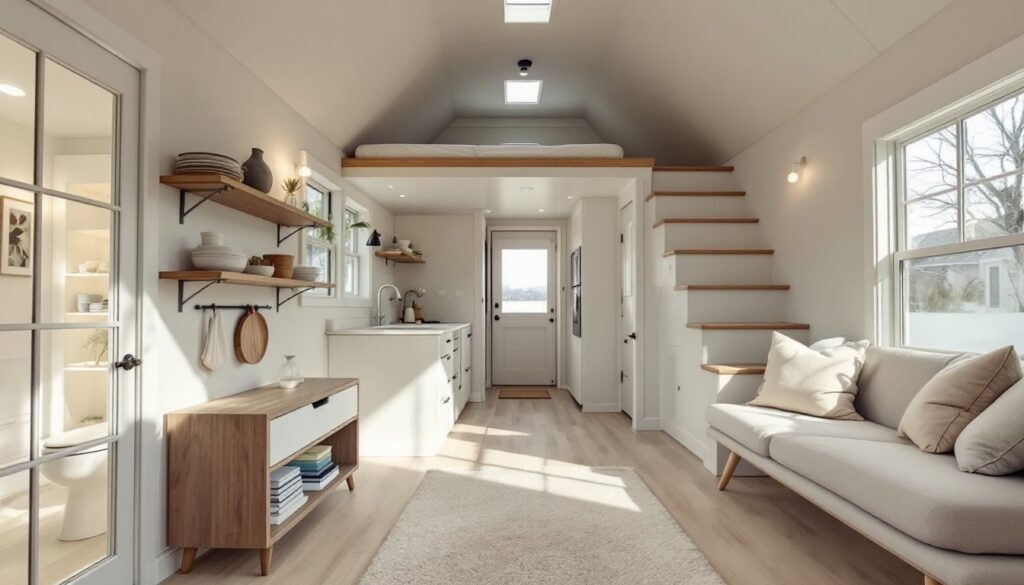
Common features in Portland tiny homes include:
- Mini-split HVAC systems (efficient heating/cooling without ductwork)
- Composting or low-flush toilets (especially in off-grid builds)
- Loft sleeping areas (maximizes floor space)
- Galley kitchens with apartment-size appliances (24-inch ranges, compact fridges)
- Rainwater collection or greywater systems (popular among eco-conscious buyers)
- Solar panel pre-wiring or full off-grid electrical setups
Design inspiration abounds on platforms like HGTV and Apartment Therapy, but remember: magazine-worthy finishes drive costs up fast.
Zoning and Legal Considerations in Portland
Portland’s zoning is more permissive than most U.S. cities, but it’s not a free-for-all. Here’s what buyers need to know:
ADUs on permanent foundations: Allowed on most residential lots citywide as of 2020. No owner-occupancy requirement, no off-street parking mandated (though some neighborhoods have parking overlays). ADUs must meet setback requirements (typically 5 feet from side and rear property lines) and height limits (usually 20 feet for detached units).
Tiny houses on wheels: These fall into a gray area. Portland does not allow permanent occupancy of RVs or THOWs on residential lots unless they’re in an approved RV park or comply with ADU codes (which typically requires a foundation). Some homeowners skirt this by claiming the THOW is a “temporary guest house,” but enforcement varies by neighborhood.
Building codes: Foundation tiny homes must meet ORSC requirements. That means egress windows (minimum 5.7 square feet of openable area, 24 inches high, 20 inches wide), smoke and CO detectors, GFCI outlets in kitchens/baths, and energy code compliance (insulation R-values, window U-factors). Lofts used for sleeping must have a minimum ceiling height of 3 feet (yes, really) and a stairway or ladder.
Utilities: ADUs must connect to city water and sewer unless the lot is outside service areas. Septic systems require county health department approval. Off-grid setups (solar + composting toilet) are legal but won’t pass inspection for a dwelling without proper backup systems.
Permits and inspections: Budget 6 to 12 months for the permitting and construction process. Portland’s Bureau of Development Services reviews plans for code compliance. Expect inspections at foundation, framing, plumbing rough-in, electrical rough-in, insulation, and final stages.
Insurance and financing: Foundation ADUs qualify for homeowner’s insurance and traditional mortgages (if on owned land). THOWs typically require RV insurance, which is cheaper but offers less coverage. Financing options for THOWs are limited: personal loans and RV loans are common, but interest rates are higher than mortgages.
HOAs and CCRs: If the property is subject to a homeowners association or covenants, conditions, and restrictions (CCRs), those may prohibit ADUs or tiny homes outright. Check before buying.
One final note: if you’re considering a tiny home for families, pay close attention to bedroom and egress requirements. The ORSC requires at least one room of 120 square feet and other bedrooms of 70 square feet minimum. Lofts accessed only by ladder don’t count as legal bedrooms.
Portland’s tiny home market offers real opportunities, but success hinges on understanding the legal landscape. When in doubt, consult a local contractor, zoning specialist, or real estate attorney before signing a purchase agreement.