Table of Contents
ToggleNew York City’s housing market has always demanded creative solutions, and tiny homes are emerging as a practical answer for buyers priced out of traditional apartments. With average Manhattan one-bedrooms pushing $4,500/month and space at a premium across all five boroughs, downsizing to under 400 square feet isn’t just trendy, it’s strategic. Whether you’re a first-time buyer, a retiree looking to simplify, or someone craving financial freedom without leaving the city, tiny homes offer a foothold in one of the world’s most competitive real estate markets. This guide covers the types available, where to find them, legal hurdles, and what you’ll actually pay in 2026.
Key Takeaways
- Tiny homes for sale in NYC range from $80,000 to $450,000 depending on type and location, making them significantly more affordable than traditional apartments as Manhattan one-bedrooms average $4,500/month.
- NYC only permits detached tiny homes and ADUs in lower-density zoning areas (R1–R5) in outer boroughs like Staten Island, eastern Queens, and the Bronx; verify zoning compliance before purchasing any property.
- All habitable tiny homes must meet NYC Building Code requirements including permanent foundations, proper egress windows, 7-foot ceiling heights, and energy code compliance, with a 2–6 month permitting timeline.
- Budget for hidden costs beyond the purchase price, including site preparation ($20,000–$60,000), utility connections ($8,000–$25,000), property taxes ($1,200–$4,000 annually), and custom furniture ($2,000–$10,000).
- Financing tiny homes under 400 sq ft can be challenging; micro-condos qualify for conventional mortgages, while ADUs may require personal loans, construction loans, or home equity lines of credit from community banks.
Why Tiny Homes Are Gaining Popularity in New York City
The shift toward tiny homes in NYC stems from three hard realities: cost, scarcity, and changing priorities.
Housing affordability is the biggest driver. The median sale price for a Manhattan condo hit $1.2 million in early 2026, and even outer boroughs like Queens and Brooklyn see studios starting at $350,000. Tiny homes, whether park models, ADUs (accessory dwelling units), or micro-condos, often land between $80,000 and $300,000 depending on location and finish level. That’s a mortgage payment many can actually manage.
Space scarcity forces innovation. NYC’s residential vacancy rate hovers around 1.4%, one of the lowest in the nation. Buyers who’d normally wait for the perfect two-bedroom are instead asking: “Do I need 800 square feet, or can I live well in 250?” Developers are responding with micro-units in rezoned areas and retrofitted buildings.
Lifestyle shifts post-pandemic also play a role. Remote work reduced the need for commute-friendly locations, and many younger buyers prioritize experiences over square footage. Tiny homes align with minimalism, lower utility bills (often $40–$80/month for electric in a well-insulated 300 sq ft unit), and reduced maintenance. It’s not about deprivation, it’s about intentional living in a city that doesn’t forgive waste.
Types of Tiny Homes Available in NYC
Tiny homes in New York City aren’t all the same. Understanding the categories helps narrow your search and align expectations with zoning realities.
Prefab and Modular Tiny Homes
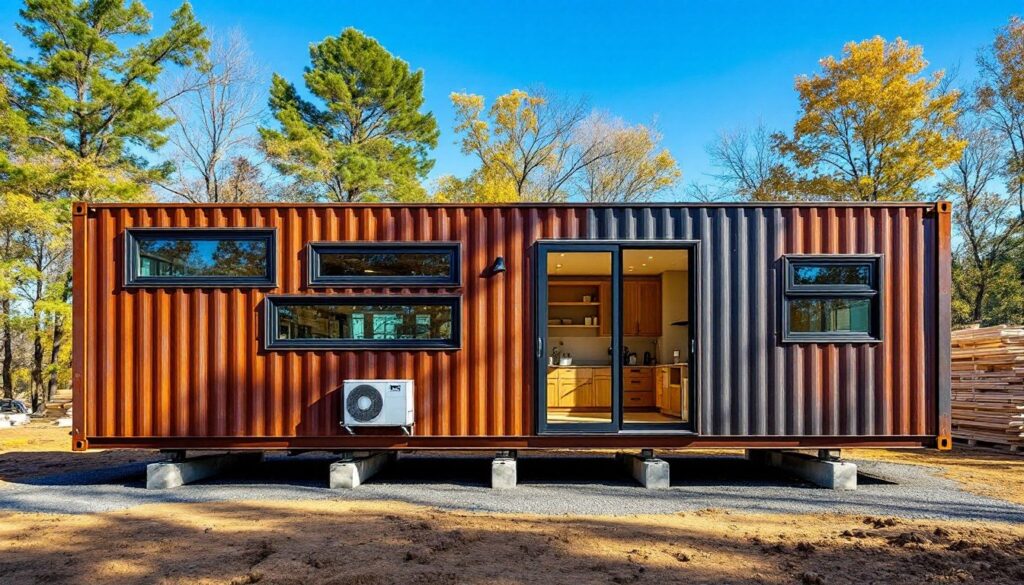
Prefab and modular units are factory-built in sections, then transported and assembled on-site. They’re faster to “build” than stick-built homes, often ready in 8–12 weeks after permitting, and generally cost less per square foot due to controlled manufacturing.
Modular tiny homes must meet the same building codes as traditional houses (IRC in most cases), which makes them eligible for standard mortgages and property tax treatment. In NYC, modular units are most common as ADUs on properties in lower-density zones (R3, R4, R5 in parts of Staten Island, eastern Queens, and the Bronx). Expect shells starting around $50,000 for a basic 200 sq ft unit, but budget $120,000–$180,000 delivered and finished with plumbing, electrical, HVAC, and interior finishes.
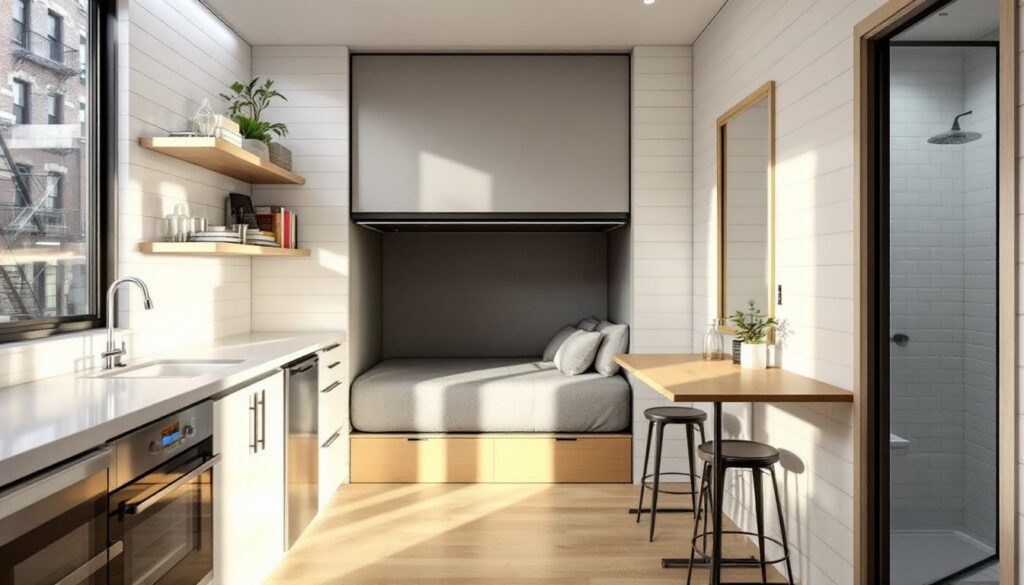
Prefab studios in multifamily developments also fall into this category. Developers use modular construction for micro-unit buildings (think 260–350 sq ft condos) to speed up timelines. These aren’t mobile: they’re permanent residences with full kitchens, bathrooms, and often built-in furniture to maximize space. Curbed has covered several micro-condo projects in Brooklyn and the Bronx where prefab methods reduced construction time by nearly 30%.
Custom-Built Tiny Houses
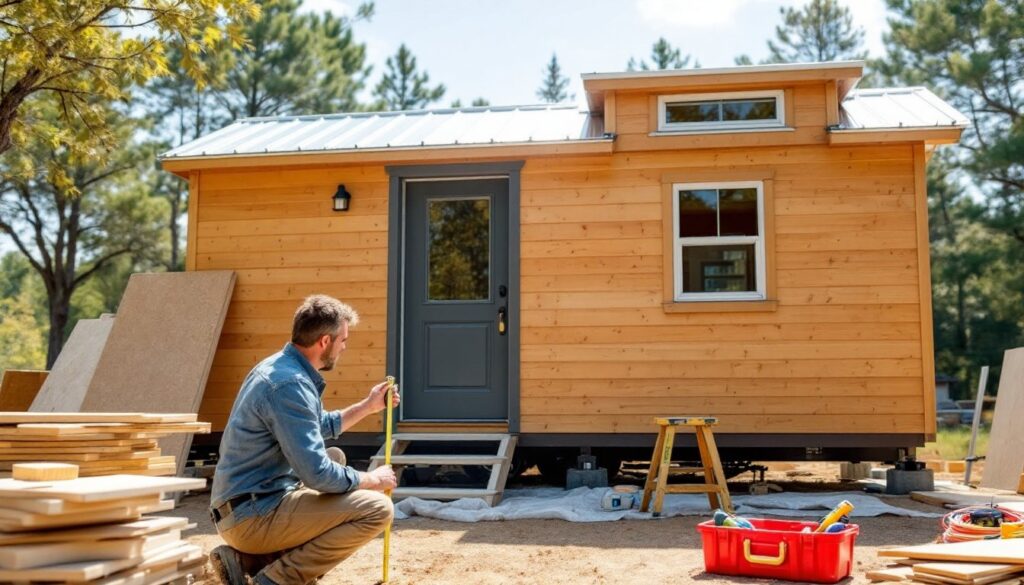
Custom-built tiny homes are site-constructed by local contractors or specialized tiny-home builders. They offer total design flexibility, unusual dimensions, high-end finishes, or unique layouts, but cost more per square foot and take longer (3–6 months minimum).
In NYC, custom builds are rare unless you own land in an eligible zone. Most buyers going custom are adding an ADU to an existing single-family property or converting a garage/basement space. Costs run $200–$400 per square foot depending on finishes, so a 300 sq ft custom unit might hit $60,000–$120,000 before permits, site prep, and utility hookups.
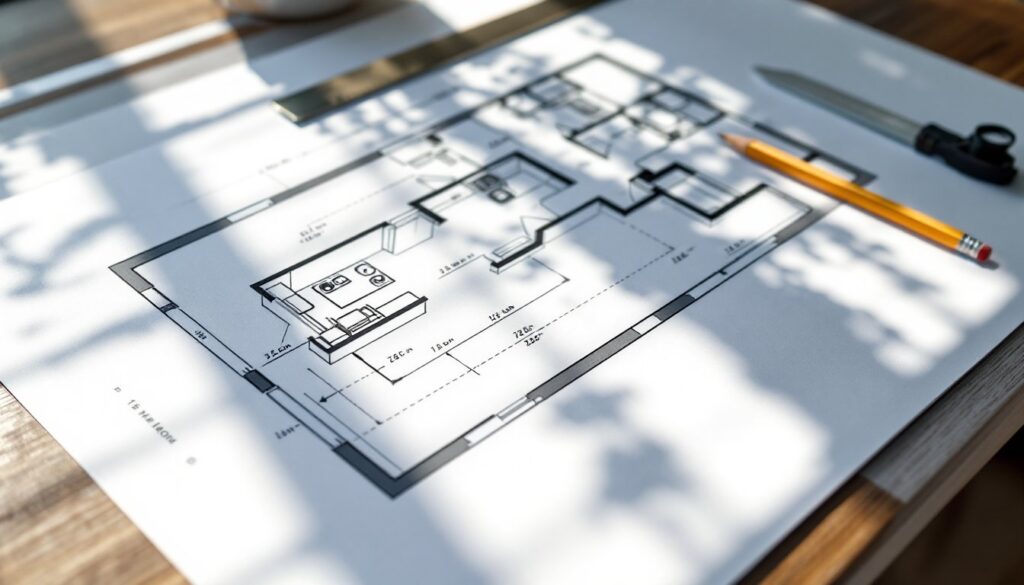
Permitting is non-negotiable for custom builds. You’ll need DOB (Department of Buildings) approval, and if the unit is habitable space, it must meet energy codes (NYCECC), egress requirements, and fire safety standards. Hiring an architect familiar with NYC zoning saves headaches. Budget $3,000–$8,000 for design and permitting alone.
One advantage: custom homes can incorporate sustainable materials and systems like composting toilets, rainwater collection, or solar panels (where zoning allows), which modular manufacturers may not offer as standard.
Where to Find Tiny Homes for Sale in NYC
Finding a tiny home in NYC requires looking beyond typical real estate listings. Here’s where to focus your search.
Micro-condo developments: Several buildings in Brooklyn, the Bronx, and Queens now offer units under 400 sq ft. Check listings on StreetEasy, Zillow, or directly with developers like Carmel Partners or HDFC co-ops. Prices range from $180,000 to $450,000 depending on neighborhood and amenities. These are fully legal, financeable, and come with standard condo rights.
ADU builders and dealers: If you own property in an eligible zone, companies like Tru Form Tiny, Backcountry Tiny Homes, or local modular dealers can deliver and install ADUs. Start with the NYC ADU portal (nyc.gov) to confirm your lot qualifies, then request quotes. Many builders offer virtual tours and customization.
Online marketplaces: Sites like Tiny House Listings, Tiny Home Builders, and even Facebook Marketplace occasionally feature used or custom NYC-area units. Be cautious, verify the unit meets NYC building codes and that it’s legal to place on your intended site. A “tiny house on wheels” (THOW) is classified as an RV in New York State and cannot be used as a permanent residence in NYC without violating zoning.
Real estate agents specializing in alternative housing: A growing number of agents focus on micro-living and ADUs. They understand zoning nuances and can connect you with off-market opportunities or upcoming micro-unit projects. Brokers familiar with urban tiny homes can also help navigate co-op and condo boards if you’re buying into a building.
Zoning-eligible neighborhoods: Focus on areas with lower-density zoning where ADUs or detached tiny homes are allowed: parts of Staten Island, eastern Queens (Douglaston, Bayside), City Island in the Bronx, and select Brooklyn zones. Check the NYC Zoning & Land Use Map (ZoLa) before making offers.
Legal Considerations and Zoning Requirements
NYC’s zoning and building codes are strict, and tiny homes must comply or risk fines, eviction, or demolition orders. Here’s what you need to know.
Zoning: Tiny homes are only legal where zoning allows the dwelling type. In most of NYC (R6–R10 high-density zones), you can’t build a detached single-family home or ADU. Lower-density zones (R1–R5) in the outer boroughs permit ADUs on certain lot sizes, typically requiring a minimum lot width and rear yard setback. Check ZoLa or consult a zoning attorney before purchasing land or a unit.
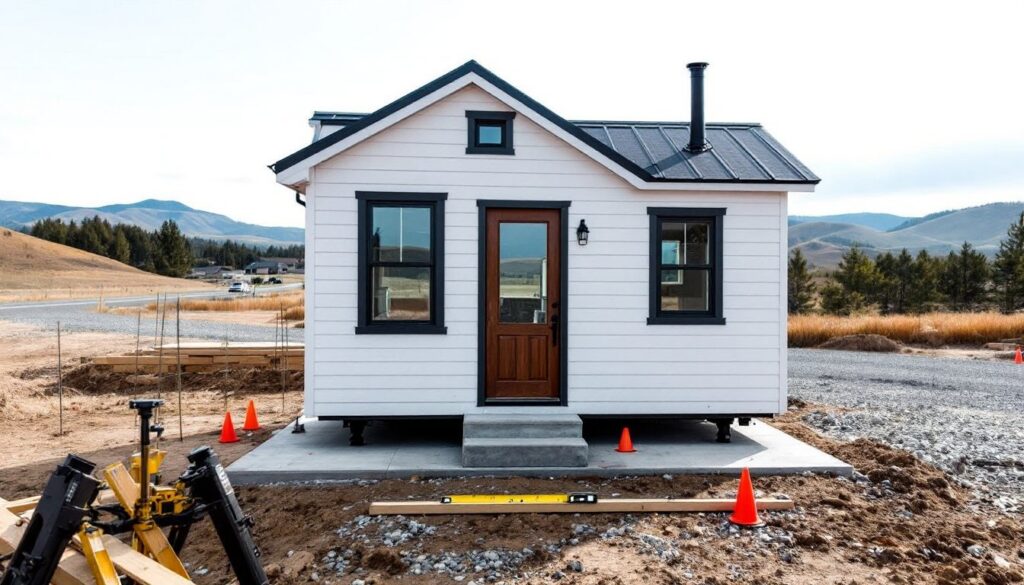
Building codes: All habitable structures must meet the NYC Building Code and Residential Code (IRC). That means proper foundations (no permanent placement on wheels or blocks), egress windows in sleeping areas, minimum ceiling heights (7 feet for most rooms, 6’8″ in bathrooms), GFCI outlets, smoke/CO detectors, and insulation meeting energy codes. DIY builds or out-of-state prefabs that skip these steps won’t pass inspection.
Permits: Expect to file for a New Work or Alteration permit with DOB. The process involves architectural plans, structural engineering (if adding load), plumbing and electrical sign-offs, and inspections at rough-in and final stages. Timeline: 2–6 months depending on complexity. Skipping permits is a gamble, unpermitted structures can block future sales, mortgage approvals, or insurance claims.
ADU rules (new as of 2024): NYC legalized ADUs in certain zones under Local Law 49. You can build one ADU per single-family lot if it meets setbacks, height limits (often 15–20 feet), and square footage caps (typically 800 sq ft max). The ADU must have separate utilities or submetered connections and cannot be rented short-term (Airbnb, VRBO) without proper permits. Understanding tiny home financing options is crucial since ADUs may qualify for home equity loans but not always conventional mortgages.
Co-op and condo rules: If buying a micro-condo, the building’s bylaws and board approval process apply. Some co-ops restrict occupancy to owner-only or cap renovations. Read the offering plan carefully.
Safety note: Never occupy a space without a Certificate of Occupancy (C of O) that matches its use. Living in a garage, shed, or RV parked in a driveway violates NYC housing codes and can result in vacate orders.
Cost Breakdown: What to Expect When Buying a Tiny Home in NYC
Budgeting for a tiny home in NYC goes well beyond the purchase price. Here’s a realistic breakdown as of 2026.
Purchase price:
- Micro-condos (260–400 sq ft): $180,000–$450,000 depending on borough and building age. Newer construction in Astoria or Prospect Heights skews higher: HDFC co-ops in the Bronx can dip below $200,000.
- Prefab/modular ADUs (200–400 sq ft): $80,000–$180,000 for the unit itself, delivered and set. Add $20,000–$60,000 for site prep, foundation (concrete slab or piers), utility connections, and permits.
- Custom-built ADUs (250–400 sq ft): $60,000–$150,000 in construction costs, plus $10,000–$30,000 for design, engineering, and permitting.
Financing: Many lenders treat tiny homes under 400 sq ft as non-conforming, especially ADUs. You may need a personal loan (rates 7–12%), construction loan, or home equity line of credit if adding to existing property. Micro-condos qualify for conventional mortgages if they meet Fannie Mae guidelines (permanent foundation, minimum 400 sq ft for some lenders). Shop around, some credit unions and community banks offer specialized tiny home loans.
Utilities and hookups: Connecting water, sewer, electric, and gas to an ADU runs $8,000–$25,000 in NYC depending on distance from mains and whether you need DOT permits for street cuts. Micro-condos include utilities in common charges.
Ongoing costs:
- Property taxes: ADUs on your lot increase assessed value. Expect annual taxes to rise $1,200–$4,000 depending on borough. Micro-condos carry their own tax bills, often $1,800–$6,000/year.
- Common charges or HOA fees (condos): $200–$600/month for micro-units, covering building maintenance, property management, and sometimes heat/hot water.
- Insurance: Homeowners or condo insurance for a tiny home runs $400–$1,200/year. ADUs may be covered under your primary dwelling’s policy with a rider.
- Utilities: Electric in a well-insulated 300 sq ft space averages $40–$80/month. Gas (if applicable) adds $20–$50 in winter. Many tiny homeowners skip gas entirely and use induction cooktops and mini-split heat pumps.
Hidden costs to anticipate:
- Storage: You’ll likely need off-site storage ($100–$300/month in NYC) unless you ruthlessly pare belongings.
- Custom furniture: Built-ins, Murphy beds, and fold-down tables add $2,000–$10,000 but are often essential in sub-300 sq ft spaces. HGTV’s tiny home series often highlights space-saving furniture solutions that work in urban micro-units.
- Resale considerations: Tiny homes can appreciate, but the market is still niche. Research tiny home resale trends before buying to understand exit strategies.
Total realistic budget (ADU example): $150,000 prefab unit + $35,000 site/utilities/permits + $15,000 financing/closing costs = $200,000 to own a 300 sq ft ADU in Queens. A micro-condo might run $220,000 purchase + $8,000 closing costs = $228,000 all-in, but with less control over design.
Prices vary widely by neighborhood, material quality, and how much sweat equity you can contribute. If you’re considering a tiny home for a growing household, it’s worth exploring whether tiny homes work for families before committing. For a more granular financial picture, review a detailed cost breakdown before signing contracts. If you want a truly personalized space, the custom-built route offers flexibility but demands patience and a larger upfront investment.
Bottom line: Tiny homes in NYC are attainable, but only if you budget for the full project, respect zoning laws, and secure proper permits. Cutting corners leads to costly fixes, or worse, an unlivable space.