Table of Contents
ToggleAsheville’s blend of mountain scenery, creative culture, and moderate climate has made it a magnet for people rethinking how much house they actually need. The city’s tiny home market has evolved from a quirky niche to a legitimate housing option, with buyers ranging from retirees downsizing to young professionals chasing financial freedom. Whether someone’s looking for a THOW (tiny house on wheels) parked in a mountain hollow or a foundation-built ADU (accessory dwelling unit) tucked behind a Craftsman bungalow, Asheville’s market offers options, but only if buyers know where to look and what regulations apply.
Key Takeaways
- Asheville’s tiny homes for sale range from $60,000–$120,000, offering an affordable entry point compared to the county’s median home price of around $450,000, and appeal to retirees, young professionals, and eco-conscious buyers seeking sustainable living.
- Tiny homes on wheels (THOWs) offer flexibility but face financing challenges since most lenders require RV loans with higher rates rather than conventional mortgages, while foundation-built ADUs qualify for standard home loans and may appreciate in value.
- Buncombe County’s 2023 zoning update explicitly permits accessory dwelling units (ADUs) on residential lots and allows THOWs in RV parks, providing clearer legal pathways that previously operated in gray areas.
- Buyers must navigate multiple channels—tiny home builders, online marketplaces, RV parks, and specialized real estate agents—to find available inventory, since Asheville’s tiny home market lacks a centralized listing system.
- Before purchasing, verify zoning regulations (which differ between Asheville city and Buncombe County), secure financing pre-approval, and hire a structural engineer to inspect used homes, as skipping due diligence can result in unpermitted structures that cannot be legally occupied or financed.
- Utility setup, whether municipal connections, RV hookups, or off-grid solar systems ($8,000–$15,000 installed), and accessibility considerations for aging in place should be evaluated early to match lifestyle needs and long-term mobility plans.
Why Asheville Is a Tiny Home Hotspot
Asheville sits at the intersection of several trends driving tiny home popularity. First, housing costs in Buncombe County have climbed steadily, with median home prices hovering around $450,000 as of early 2026. For buyers priced out of conventional markets, a $60,000–$120,000 tiny home represents an entry point without decades of mortgage debt.
Second, the city’s environmental ethos aligns with the tiny home philosophy. Asheville has one of the highest per-capita populations of LEED-certified builders in the Southeast, and many tiny home manufacturers here use reclaimed lumber, low-VOC finishes, and off-grid solar systems as standard features. Buyers aren’t just downsizing square footage, they’re shrinking their carbon footprint.
Third, Asheville’s geography supports it. Unlike flat urban markets where tiny homes compete with apartment density, Western North Carolina’s rolling terrain and forested lots make small-footprint dwellings practical. A 200-square-foot cabin on three acres feels spacious when the deck overlooks the Blue Ridge.
Finally, Buncombe County updated its zoning ordinance in 2023 to explicitly permit ADUs in most residential districts, and several municipalities now allow THOWs in RV parks with extended-stay provisions. That regulatory shift cracked open a market that had operated mostly in gray areas. Buyers who previously faced zoning battles now have clearer pathways, though “clearer” doesn’t mean simple, as we’ll cover later.
Types of Tiny Homes Available in Asheville
Mobile Tiny Houses on Wheels
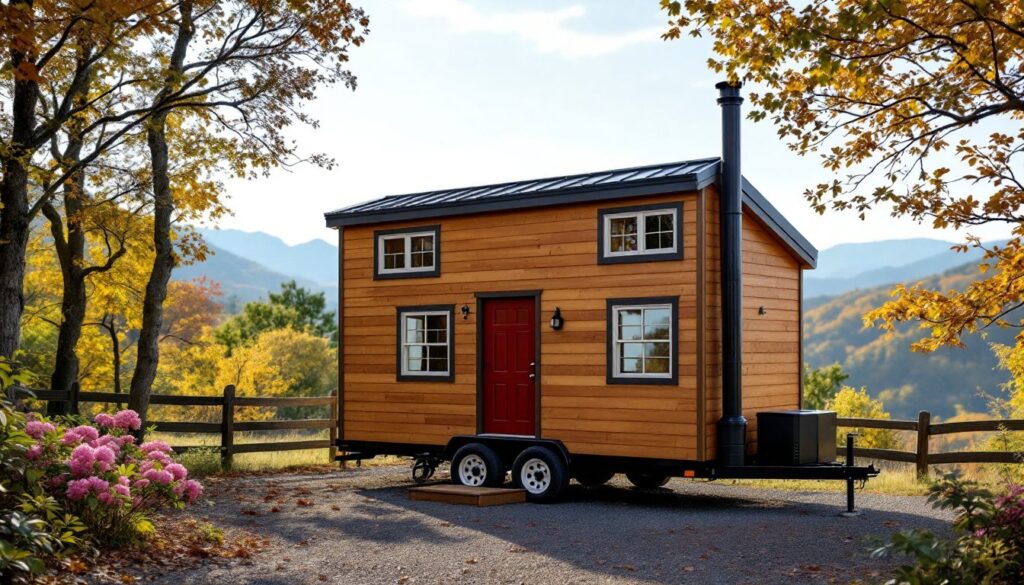
THOWs dominate Asheville’s tiny home listings. Built on double-axle or gooseneck trailers (typically 20–28 feet long), these homes are legally classified as RVs, which has pros and cons. On the upside, they bypass traditional building permits in some jurisdictions and offer mobility, owners can relocate if a landlord raises lot rent or if they want a change of scenery. Buyers seeking flexibility often gravitate toward mobile tiny homes for that reason.
On the downside, financing is trickier. Most lenders won’t offer conventional mortgages for THOWs: buyers typically need RV loans (higher interest rates, shorter terms) or personal loans. Insurance also differs, RV policies cover the structure, but not as real property. Expect $800–$1,500 annually for coverage, depending on the home’s value and whether it’s parked long-term or travels frequently.
Construction quality varies widely. High-end Asheville builders, like those profiled in Curbed’s tiny house feature, use SIPs (structural insulated panels), metal roofing, and spray-foam insulation rated for mountain winters. Budget models might have fiberglass batts and vinyl siding better suited to temperate climates. Check the trailer frame rating (usually 10,000–14,000 GVWR) and confirm the build uses actual 2×4 or 2×6 framing, not furring strips, especially if the home will sit in a high-wind zone.
Foundation-Built Tiny Homes and ADUs
These are stick-built structures on permanent foundations, typically 400–800 square feet. They follow the International Residential Code (IRC) Appendix Q for tiny houses or standard residential codes if larger. Because they’re real property, buyers can secure conventional mortgages, and property values often appreciate alongside the primary dwelling.
ADUs, sometimes called “granny flats” or backyard cottages, are popular in Asheville’s older neighborhoods where lot sizes allow. A 500-square-foot ADU on a 0.25-acre lot in West Asheville might cost $100,000–$180,000 to build (materials, labor, permits), depending on finishes. Some sellers list turnkey ADUs separately from the main house, though most sell as a package.
Foundation-built tiny homes must meet local setback requirements (usually 5–10 feet from side property lines), and they trigger inspections for framing, electrical (per NEC), plumbing, and insulation. Expect four to six inspections during construction if building new, or a third-party structural assessment if buying used. If a seller claims a foundation-built tiny home is “permitted” but can’t produce a certificate of occupancy, walk away, that’s a red flag for unpermitted work that’ll complicate resale and tiny home resale value.
Where to Find Tiny Homes for Sale in Asheville
Asheville’s tiny home market isn’t centralized like traditional real estate. Buyers need to check multiple channels:
Tiny home builders and manufacturers: Several Western North Carolina companies, Tiny House Building Company, Wishbone Tiny Homes, and smaller custom shops, sell models direct. Expect 6–12 month lead times for custom builds. Touring a builder’s lot lets buyers see construction quality firsthand and customize layouts before the build starts.
Online marketplaces: Tiny House Listings, Tiny House Marketplace, and Facebook Marketplace all feature Asheville-area homes. Listings range from DIY owner-builds needing finish work to professionally built homes ready to tow. Vet sellers carefully, request photos of the trailer VIN, weight distribution, and any permits if it was built as a dwelling rather than an RV.
RV parks and tiny home communities: Asheville has several parks that allow long-term THOW placement, and some sell homes already sited with utilities connected. Examples include Asheville East KOA (which has a tiny home rental section) and private communities near Black Mountain and Weaverville. Buying a home in place simplifies hookups but ties the buyer to that park’s lot rent and rules.
Real estate agents specializing in alternative housing: A handful of Angi-listed Realtors in Asheville handle tiny homes and ADUs. They can navigate MLS listings that include ADU sales and connect buyers with land parcels zoned for tiny homes. Commission structures vary, but having an agent who understands the difference between a THOW and a park model RV saves headaches.
Land-and-tiny-home packages: Some sellers list rural parcels (1–5 acres) with a tiny home already placed. These are attractive for buyers wanting seclusion, but verify well and septic permits (if off-grid) and confirm the access road can handle trailer delivery if the home ever needs moving. A 12% grade or tighter-than-90-degree turn can make towing impossible without a specialized rig.
What to Know Before Buying a Tiny Home in Asheville
Zoning Laws and Placement Regulations
Buncombe County and Asheville city limits have different rules, and they change regularly. As of 2026, Asheville city code allows one ADU per single-family lot in R-1 and R-2 zones, provided the ADU doesn’t exceed 800 square feet or the footprint of the primary dwelling (whichever is smaller). Owner-occupancy of either the main house or ADU is required, no double-rental setups.
For THOWs, the city treats them as RVs. They’re allowed in RV parks with proper utilities but generally not permitted as primary dwellings on residential lots unless they meet foundation and IRC Appendix Q standards (which negates the “on wheels” part). Some buyers skirt this by registering the THOW as a temporary structure during construction of a permanent home, then quietly living in it, risky, because code enforcement can issue a stop-occupancy order.
Outside city limits, Buncombe County zoning is slightly more permissive. THOWs are allowed on agricultural parcels (A-1 zoning) as temporary farm worker housing, and some buyers use that loophole for year-round living. County inspectors rarely patrol rural roads, but neighbors can file complaints, and any future sale will require disclosure of non-conforming use.
Several tiny home-friendly communities have sprung up with private covenants that supersede zoning. These planned developments (some featured in Country Living for their rustic aesthetic) allow THOWs or small cabins under HOA rules. Read covenants carefully, some cap resale prices, restrict Airbnb rentals, or require specific siding materials.
Utilities: Foundation homes connect to municipal water/sewer or well/septic following standard protocols. THOWs in parks typically use RV hookups: 30- or 50-amp electrical service, potable water via hose, and either sewer connection or a gray-water system with periodic black-tank pumping. Off-grid setups need a 2,000–4,000-watt solar array (about $8,000–$15,000 installed), a composting toilet, and rainwater catchment if no well exists. Asheville’s average annual rainfall (37 inches) supports catchment, but county health departments regulate potability standards.
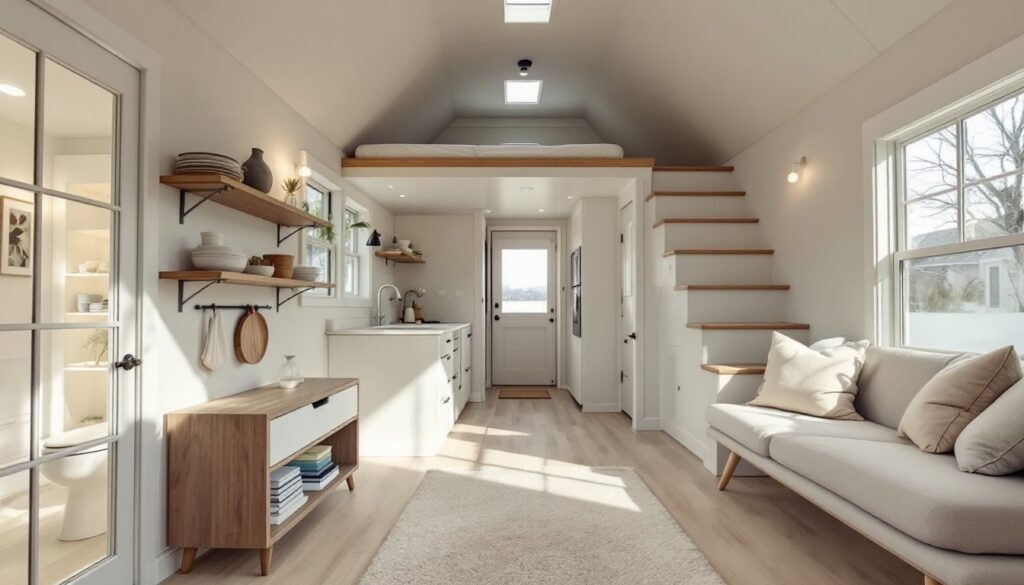
Accessibility considerations: Buyers planning to age in place should investigate tiny home accessibility design early. Standard THOW lofts accessed by ladder don’t work for anyone with mobility limits. Some builders offer single-level layouts or wheelchair-accessible models that meet ADA guidelines, though those require trailer lengths of 28+ feet to fit a bedroom, bath, and kitchen on one floor. Foundation-built tiny homes have more flexibility for ramps, wider doorways (36 inches minimum), and roll-in showers.
Financing and insurance: As noted, THOWs rarely qualify for conventional mortgages. Tiny home loans through specialty lenders or credit unions are an option, with APRs around 6–9% and terms of 10–15 years. Foundation-built ADUs can use standard home loans if they’re on a deeded lot. Always get pre-approval before shopping, sellers of in-demand tiny homes won’t hold inventory for buyers scrambling to arrange cash.
Insurance is non-negotiable. Even if a lender doesn’t require it, Asheville’s weather (ice storms, occasional tornadoes, heavy snow in higher elevations) makes coverage critical. RV policies cover THOWs: homeowners’ policies cover foundation-built. Umbrella liability is wise if the tiny home will be on the same parcel as a main dwelling, trip-and-fall claims don’t care about square footage.
Custom builds versus used: Buying new from a builder means choosing layouts, materials, and systems, but costs run $300–$600 per square foot for quality work. Used tiny homes sell for $40,000–$90,000 depending on age and condition, but thorough inspection is mandatory. Check for roof leaks (especially around dormers and skylights), floor rot from plumbing leaks, and trailer frame rust. Hiring a structural engineer for a $300–$500 inspection is cheaper than discovering a rotten subfloor after purchase. Families considering the transition might explore whether a tiny home for families layout meets their needs before committing.
Asheville’s tiny home market rewards informed buyers. Those who research zoning, secure financing, and inspect thoroughly find homes that blend affordability with mountain lifestyle. Those who skip due diligence end up with a pretty shell they can’t legally occupy or finance.