Table of Contents
ToggleBuilding a tiny home on a permanent foundation isn’t just about downsizing, it’s about establishing roots in a compact, efficient dwelling that meets the same building standards as any traditional house. Unlike tiny houses on wheels, foundation-built tiny homes qualify as real property, opening doors to conventional financing, lower insurance rates, and fewer zoning headaches. They’re not RVs or accessory structures: they’re legitimate dwellings built to International Residential Code (IRC) standards, usually between 100 and 400 square feet. This guide walks through the foundation options, permitting realities, and cost considerations you’ll face when building small but permanent.
Key Takeaways
- Tiny homes on foundations are legally classified as real property, making them eligible for conventional mortgage financing, FHA loans, and homeowners insurance at 30–50% lower rates than RV-based alternatives.
- Foundation-built tiny homes must meet International Residential Code (IRC) standards, including specific egress windows, ceiling heights, and full mechanical systems—making them a legitimate residential dwelling, not an accessory structure.
- Slab-on-grade and pier and beam are the two primary foundation options; slabs offer cost savings in stable soil conditions, while piers provide flexibility on sloped lots and easier repairs for long-term durability.
- Zoning and permit requirements vary significantly by jurisdiction—verify minimum square footage allowances, primary residence eligibility, and setback rules with your local building department before design and construction begin.
- Construction costs for tiny homes on foundations typically range from $150–$250 per square foot ($45,000–$75,000 for a 300-square-foot home), with foundation work, framing, and mechanical systems representing the largest expense categories beyond land and site work.
What Are Tiny Homes on Foundations?
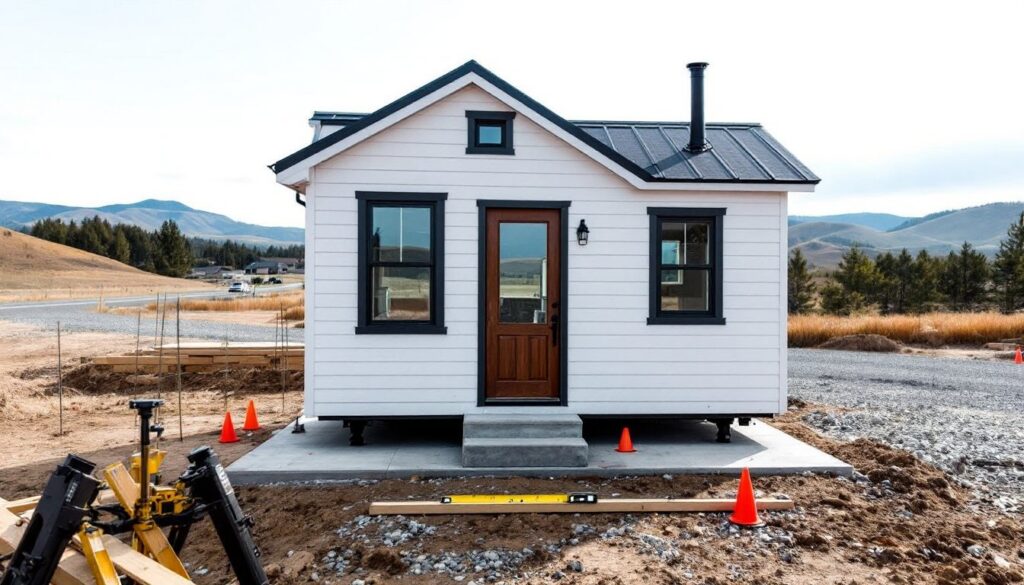
A tiny home on a foundation is a permanently affixed dwelling built on-site or delivered as a modular unit and secured to a concrete slab, pier and beam system, or other code-compliant foundation. Unlike mobile tiny houses on trailers, these structures can’t be towed away. They’re classified as real estate, which means they appreciate (or depreciate) with the land and are taxed as traditional homes.
Most foundation-based tiny homes range from 100 to 400 square feet, though some jurisdictions set minimum size requirements, often 120 to 150 square feet for a dwelling to qualify for an occupancy permit. Structurally, they’re built using standard 2×4 or 2×6 framing, conventional roofing, and exterior sheathing like OSB or plywood. They must meet the same IRC (International Residential Code) requirements as full-size homes, including egress windows, minimum ceiling heights (usually 7 feet in habitable rooms, 6’8″ in bathrooms), and proper insulation.
Because they’re permanent, these homes often include full plumbing and electrical systems tied into municipal services or private wells and septic. This isn’t a campsite setup, you’re running 12/2 or 14/2 Romex through studs, installing a breaker panel, and roughing in drain lines with proper venting, all subject to inspection. The trade-off for this complexity? You get a structure that can be financed like real property, insured at lower premiums than an RV, and, in many cases, lived in year-round without the legal gray areas that plague tiny homes on wheels.
Key Benefits of Building on a Permanent Foundation
Permanent foundations unlock conventional mortgage financing. Banks won’t write a 30-year note on a house attached to an axle, but a tiny home on a slab or piers qualifies for the same loan products as a 2,000-square-foot ranch. FHA and USDA loans may even be available if the home meets minimum size requirements and the property is in an eligible area.
Lower insurance costs are another upside. Homeowners insurance for a foundation-built dwelling typically runs 30–50% less than RV or specialty tiny-house-on-wheels policies, which often exclude certain perils or require expensive specialized coverage. Insurers view permanent structures as lower-risk because they’re not subject to road vibration, hitch failure, or the structural compromises inherent in a towable design.
Foundation-built tiny homes also sidestep many zoning restrictions that block trailer-based dwellings. Most municipalities prohibit long-term occupancy of RVs or structures on wheels in residential zones, but a code-compliant tiny home on a foundation is treated like any other single-family residence. You’ll still need to verify minimum square footage rules and setback requirements, but the conversation starts on firmer legal ground.
From a construction standpoint, you’re free to use heavier materials and standard building techniques without worrying about weight limits or road-legal dimensions. Want to frame with actual 2x6s for better insulation? Install a cast-iron tub? Use full-thickness drywall instead of lightweight paneling? Go ahead. You’re not constrained by a 13’6″ highway clearance or an 8’6″ width cap. That opens up design possibilities that make small spaces feel substantially more like traditional homes, which matters when planning for family living in tight quarters.
Foundation Types for Tiny Homes
Choosing a foundation type depends on soil conditions, frost depth, budget, and local code requirements. The two most common systems for tiny homes are slab-on-grade and pier and beam.
Slab Foundations
A monolithic slab (or slab-on-grade) pours the footing and floor in a single pour, typically 4 to 6 inches thick with a thickened edge that extends below the frost line. It’s the fastest, most economical option in areas with stable soil and minimal frost heave. Expect to excavate 6–12 inches, lay a compacted gravel base, install a 6-mil polyethylene vapor barrier, and tie in #4 rebar or 10-10 welded wire mesh for reinforcement.
Slabs work well for tiny homes because the entire structure sits on a single, level platform, no need for floor joists or subfloor sheathing. Plumbing and electrical runs are embedded in or run beneath the slab, so plan rough-ins carefully: changes after the pour are expensive. In cold climates, add 2-inch rigid foam insulation (XPS or EPS) under the slab to meet energy code and prevent heat loss.
One caution: slabs are unforgiving if the soil settles unevenly. A thorough soil compaction test (ask for 95% Standard Proctor Density) is non-negotiable. If your site has expansive clay or high water tables, a slab may crack or heave. In those cases, switch to a pier system or consider a floating slab with a granular drainage layer.
Pier and Beam Foundations
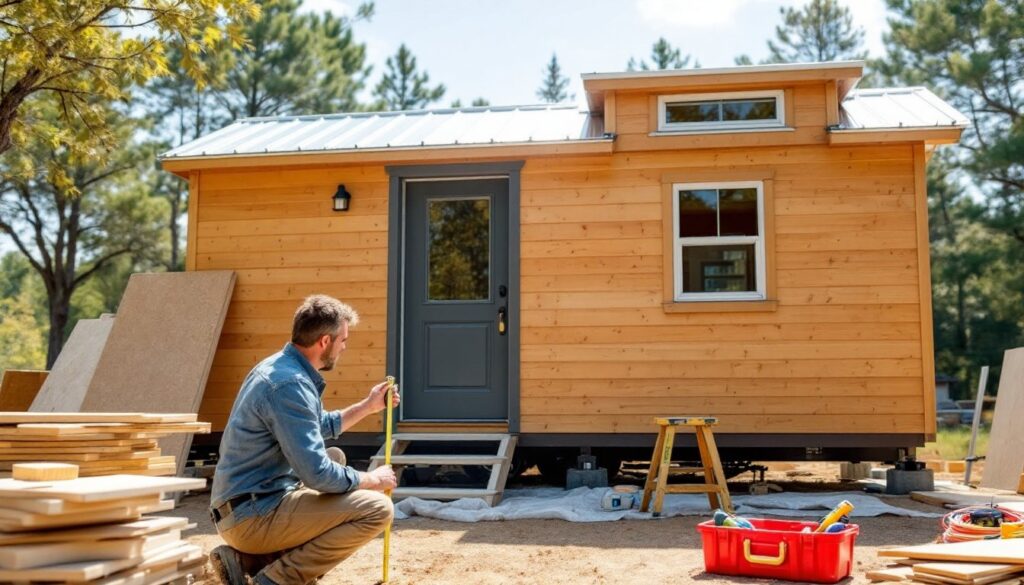
A pier and beam (or post and beam) foundation uses concrete footings or helical piers to support a pressure-treated sill plate and floor frame. Piers are spaced 4 to 8 feet apart, depending on joist span and load, and extend below the frost line, typically 36 to 48 inches in northern climates, less in the South.
This system elevates the tiny home 12 to 24 inches off the ground, improving drainage and ventilation while allowing easier access to plumbing and wiring. It’s ideal for sloped lots, areas with poor drainage, or sites where you want to minimize site disturbance. Piers can be poured-in-place concrete (8–12 inch diameter) or precast concrete blocks, though codes often require poured footings for permanent structures.
Floor framing typically uses 2×6 or 2×8 joists on 16-inch centers, topped with 3/4-inch tongue-and-groove plywood or OSB. Because the floor is exposed underneath, you’ll need to insulate between joists with fiberglass batts (R-19 or better) or spray foam, and enclose the crawl space with a continuous vapor barrier and vented skirting to meet code.
Pier and beam systems cost more in labor and materials than slabs, but they’re more forgiving on uneven terrain and easier to repair if settling occurs. They’re also a better fit for areas with active soil or seismic concerns, since the structure can flex slightly without cracking a monolithic slab. Planning a custom build with unique site challenges? Piers offer flexibility worth the added expense.
Zoning, Permits, and Building Code Requirements
Before you pour a footer, confirm that your local zoning ordinance allows dwellings under 400 square feet. Some jurisdictions set minimum habitable area requirements, often 120, 150, or even 400 square feet, that can disqualify ultra-compact designs. Others restrict tiny homes to specific zones (agricultural, rural residential) or require them as accessory dwelling units (ADUs) on lots with an existing primary residence.
Call your local building department early. Ask three questions: (1) What’s the minimum square footage for a dwelling? (2) Can a tiny home be the primary residence, or must it be an ADU? (3) Are there setback or lot coverage limits that affect placement? Don’t rely on online forums or anecdotal advice, codes vary wildly by county and even by city.
Building permits are required for any foundation-built structure. The permit process typically involves submitting stamped architectural plans (drawn by a licensed architect or engineer in many states), a site plan showing setbacks and utilities, and structural calculations if you’re using non-standard framing or spans. Plan reviews can take 2–6 weeks, longer in busy jurisdictions.
Once permitted, expect multiple inspections: footing and foundation, framing and sheathing, rough plumbing and electrical, insulation, and final. Each must pass before you proceed. Inspectors will verify compliance with the IRC (International Residential Code) and NEC (National Electrical Code), including egress windows (minimum 5.7 square feet of openable area, with sill height no more than 44 inches above the floor), smoke and CO detectors, GFCI outlets in wet areas, and proper venting for combustion appliances.
Some areas have adopted Appendix Q of the IRC, which establishes specific standards for dwellings under 400 square feet, loft ladder specs, reduced ceiling heights in lofts, and compact stairway allowances. If your jurisdiction has adopted Appendix Q, it can make permitting a tiny home easier. If not, you’ll need variances or creative interpretations to meet standard code.
Be honest about your skill level. If you’re not confident running a 200-amp service panel or sizing floor joists for live and dead loads, hire licensed pros for electrical, plumbing, and structural engineering. Failed inspections cost time and money, and some code violations can’t be corrected without tearing out finished work. Insights from renovation pros can save headaches when navigating complex code requirements.
Cost Breakdown: What to Expect When Building
Budget for a foundation-built tiny home varies widely by region, finish level, and whether you’re doing the work yourself or hiring contractors. As a rough baseline, expect $150 to $250 per square foot for a turnkey build, meaning a 300-square-foot home could run $45,000 to $75,000, excluding land.
Foundation costs depend on type and site conditions. A simple slab-on-grade for a 200-square-foot footprint might cost $2,000–$4,000 in materials and labor (gravel, rebar, vapor barrier, concrete at roughly $125–$150 per cubic yard, plus finishing). A pier and beam system with eight to twelve poured footings and pressure-treated sill plates can run $3,000–$6,000, more if you’re dealing with deep frost lines or need engineered helical piers.
Framing and shell (walls, roof, sheathing, windows, exterior door) typically account for 25–35% of total construction cost. Using standard 2×4 studs on 16-inch centers, 7/16-inch OSB sheathing, and architectural shingles over 15-pound felt, you’re looking at roughly $8,000–$15,000 for a 200–300-square-foot shell, depending on roof complexity and window quality. Upgrading to low-E double-pane windows adds $200–$500 per window but pays off in energy savings.
Mechanical, electrical, and plumbing (MEP) runs can cost $8,000–$15,000 combined if you’re tying into municipal services. DIYers can tackle some tasks (running PEX supply lines, basic outlet wiring), but hire licensed electricians for panel installation and final connections, and licensed plumbers for gas lines, sewer taps, and any work requiring pressure testing. Permit fees typically add $500–$1,500 depending on jurisdiction.
Interior finishes, drywall, flooring, cabinetry, fixtures, offer the widest cost range. Budget-friendly choices (laminate flooring, stock cabinets, basic trim) can bring a tiny home in under $100 per square foot for finishes, while custom millwork, hardwood floors, and high-end appliances can push that past $200 per square foot. For a detailed look at where money goes, review a full cost breakdown and hidden expenses.
Don’t forget site work and utilities. If your lot lacks water, sewer, or electrical service, trenching and hookups can add $5,000–$20,000. A private well runs $3,000–$10,000: a septic system for a tiny home (often a smaller aerobic or composting system) can cost $3,000–$8,000. Factor in driveway grading, landscaping, and any zoning-required improvements like curb cuts or stormwater management.
Finally, consider the opportunity cost of DIY labor. Sweat equity saves money, but a foundation-built tiny home is a multi-month project. If you’re working weekends and evenings, expect 6–12 months from permit to occupancy. Hiring out speeds the timeline but can double labor costs. Balance your skills, available time, and budget to find the right mix. Many builders find that sustainable design choices and energy-efficient systems lower long-term operating costs, offsetting some upfront investment.
Building small on a permanent foundation is a serious construction project, not a weekend shed build. But if you plan carefully, secure the right permits, and execute to code, you’ll end up with a legitimate, financeable, insurable home that proves good things really do come in small packages.