Table of Contents
ToggleIllinois has become a surprising hotspot for tiny house buyers in 2026. From rural DeKalb County to the outskirts of Chicago, these compact dwellings offer affordable entry into homeownership, downsized living, and even rental income opportunities. But buying a tiny house in Illinois isn’t the same as shopping for a traditional home, you’ll navigate different builders, zoning headaches, and financing challenges that most real estate agents won’t understand. This guide walks through the practical steps: where to find listings, what regulations apply, and how to avoid expensive mistakes before you sign any paperwork.
Key Takeaways
- Tiny houses for sale in Illinois range from $45,000 to $120,000, making homeownership accessible compared to the $285,000 median home price, while offering lower utility costs of $30–$60 monthly versus $150–$250 for traditional homes.
- Illinois tiny house buyers must navigate hyperlocal zoning laws that vary dramatically by county—rural areas like Jo Daviess and McDonough are permissive for tiny houses, while Chicago and collar counties enforce strict minimum square footage requirements that exclude most compact dwellings.
- Financing a tiny house requires alternative strategies since traditional mortgages rarely apply: RV loans work for certified models at 5–9%, while land-and-home packages offer conventional 30-year mortgages around 6–7% if the unit meets IRC Appendix Q standards.
- Foundation tiny houses appreciate and are easier to finance and insure, while tiny houses on wheels (THOW) depreciate like RVs and face restrictions on long-term placement unless classified as recreational vehicles in your jurisdiction.
- Utility hookup costs ($5,000–$15,000) and specialized insurance ($600–$1,200 annually for THOW models) significantly impact total ownership expenses, so consult a local zoning attorney and verify utility infrastructure before purchasing land.
- Four main types of tiny houses are available in Illinois—tiny houses on wheels, foundation models, prefab/modular units, and container homes—each with distinct code implications, financing options, and resale considerations.
Why Tiny Houses Are Gaining Popularity in Illinois
Illinois buyers are drawn to tiny houses for three main reasons: affordability, mobility, and lower utility costs. The median home price in Illinois hovered around $285,000 in early 2026, while a fully finished tiny house typically ranges from $45,000 to $120,000 depending on size and custom features. That price gap makes homeownership accessible to first-time buyers, retirees on fixed incomes, and remote workers who don’t need suburban square footage.
Mobility matters, especially for buyers who place tiny houses on wheels (THOW). A THOW built on a dual-axle trailer can relocate to new property, follow job opportunities, or serve as a guest house that moves with changing family needs. Illinois landowners also use tiny houses as Airbnb rentals or accessory dwelling units (ADUs) on existing residential lots, generating passive income in markets like Galena, Carbondale, and Door County border towns.
Utility savings add up fast. A well-insulated 200-square-foot tiny house might cost $30–$60 per month to heat and cool, compared to $150–$250 for a conventional single-family home. Many Illinois tiny house owners install mini-split HVAC systems (around 9,000–12,000 BTU) and tankless water heaters, which reduce energy waste and qualify for state energy efficiency rebates in some counties. Lower property taxes also apply if the structure qualifies as personal property rather than real estate, though that classification varies by township.
Types of Tiny Houses Available in Illinois
Tiny houses in Illinois fall into four main categories, each with distinct code implications and resale considerations.
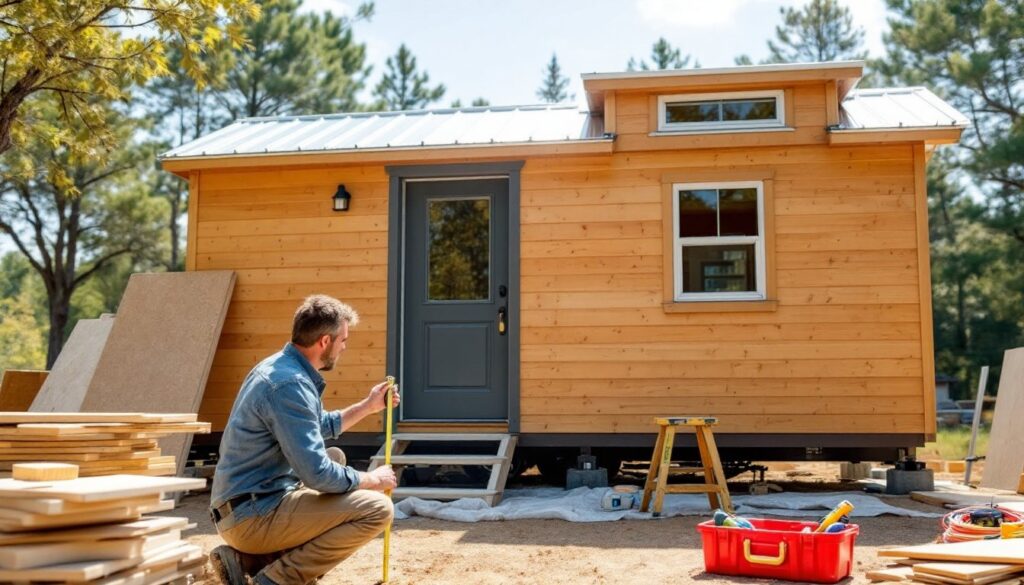
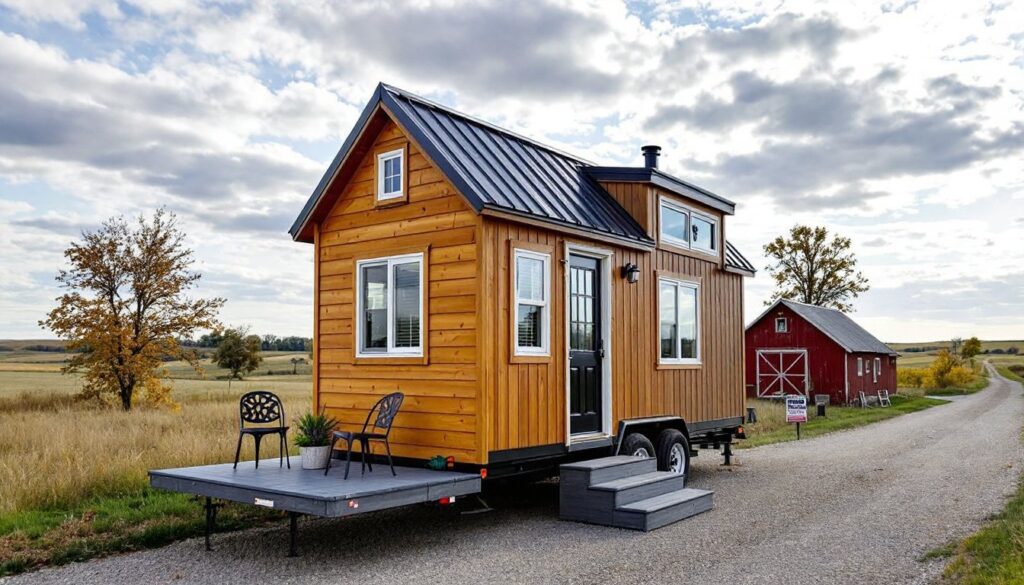
Tiny houses on wheels (THOW) are the most common. Built on trailers, they typically measure 8.5 feet wide by 20–30 feet long to stay within DOT towing limits. Most THOW units use 2×4 or 2×6 wall framing with spray foam insulation and metal roofing. They’re legally classified as recreational vehicles (RVs) in many Illinois jurisdictions, which affects where you can park them long-term.
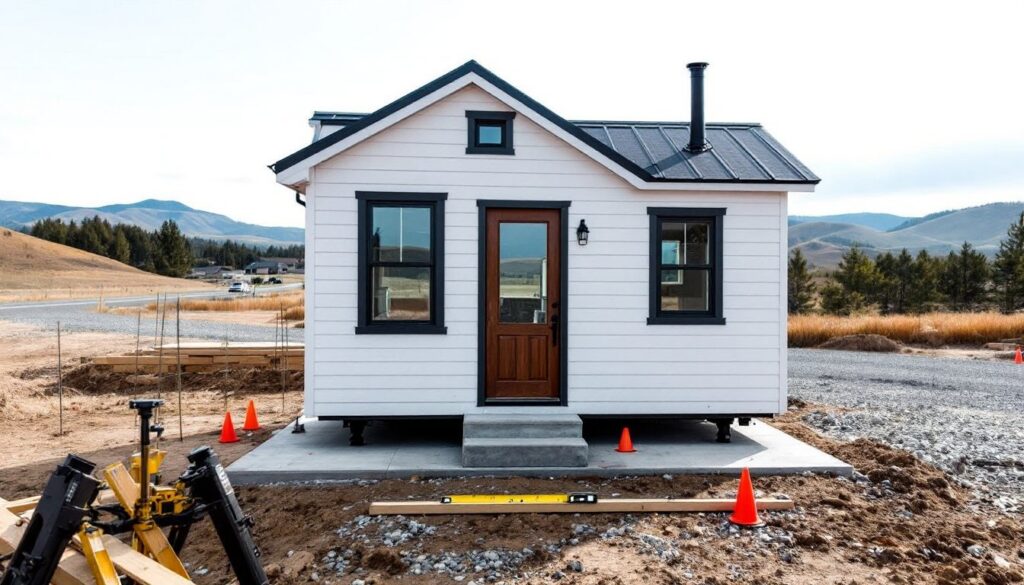
Foundation tiny houses sit on permanent foundations, either concrete slab, pier-and-beam, or frost-protected shallow foundations (FPSF). These structures must meet International Residential Code (IRC) Appendix Q standards for tiny houses, including minimum ceiling heights of 6 feet 8 inches in habitable rooms and 6 feet 4 inches in bathrooms. Foundation models are easier to finance and insure, and they’re treated as real property for tax purposes.
Prefab and modular tiny houses arrive in sections and get assembled on-site. Illinois modular builders follow HUD or state modular codes, and inspections happen at the factory before shipping. Buyers save on labor costs but pay for delivery and crane setup, which can add $3,000–$8,000 depending on distance from the factory.
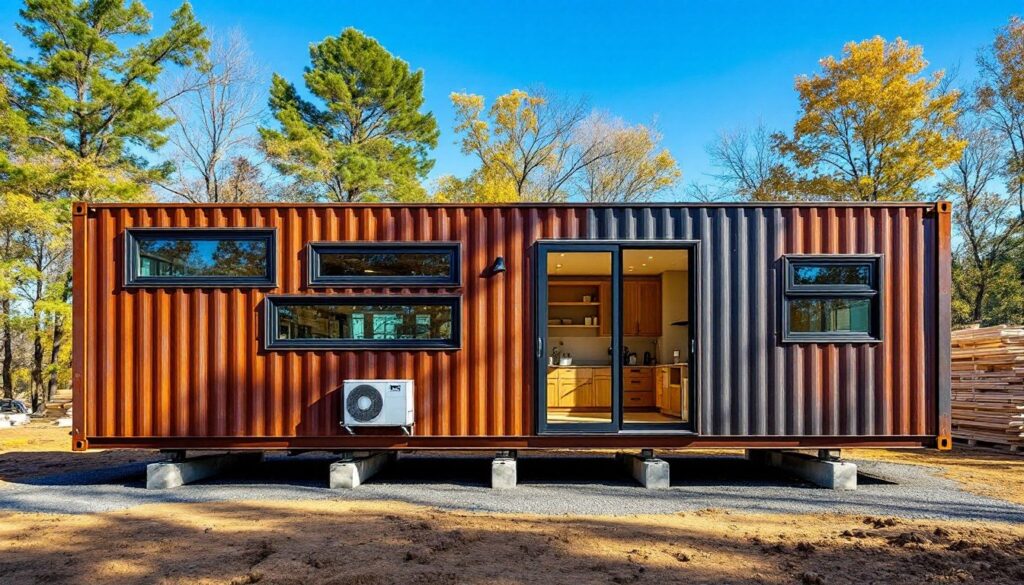
Container homes convert 20-foot or 40-foot shipping containers into livable structures. Illinois container builders typically use Corten steel containers, cut openings for windows and doors, then insulate with closed-cell spray foam. Container homes require engineered foundation plans and structural reinforcement where steel is cut, so factor in engineering fees of $1,500–$3,000.
Where to Find Tiny Houses for Sale in Illinois
Finding tiny houses in Illinois requires searching beyond traditional MLS listings. Many builders and private sellers operate through niche marketplaces, social media groups, and regional builder networks.
Online Marketplaces and Builders
Tiny House Listings (tinyhouselistings.com) aggregates THOW and foundation models from private sellers and builders nationwide, with filters for Illinois-based units. Expect to see used THOWs starting around $35,000 and new custom builds from $75,000–$150,000. Photos often show interiors with butcher block countertops, composting toilets, and fold-down furniture, standard features in the tiny house market.
Houzz connects buyers with Illinois tiny house professionals who design and build custom units. Builders listed there typically offer design consultations, CAD renderings, and turnkey delivery. Reviewing portfolios helps identify builders experienced with Illinois zoning, which varies dramatically between Cook County and rural townships.
Facebook Marketplace and regional groups like “Tiny House Illinois” surface used THOWs, unfinished shells, and DIY projects. Buyers should inspect these in person, check for roof leaks, trailer frame rust, and whether the unit was built to RVIA standards if advertised as RV-certified.
Local builders like Mint Tiny House Company (Elgin) and Tiny Idahomes (ships to Illinois) offer factory tours and customization options. Ordering direct from a builder provides warranties (typically 1–2 years on structure and systems) and ensures compliance with Illinois towing width limits and DOT lighting requirements.
What to Consider Before Buying a Tiny House in Illinois
Illinois tiny house buyers face three major hurdles: zoning compliance, utility hookups, and resale value.
Foundation requirements vary by county. Some jurisdictions mandate permanent foundations for any dwelling used as a primary residence, which disqualifies THOWs unless classified as RVs or temporary structures. Always request a zoning verification letter from the local building department before purchasing land or placing a tiny house.
Utility hookups add $5,000–$15,000 if the property lacks existing infrastructure. Running 200-amp electrical service from a pole to the tiny house requires trenching, conduit, and a licensed electrician. Septic systems cost $8,000–$20,000 depending on soil percolation rates and county health department requirements. Many tiny house owners install composting toilets and greywater systems to avoid septic costs, but check local health codes, some Illinois counties prohibit greywater discharge.
Resale considerations matter even if you plan to stay long-term. THOWs depreciate like RVs unless they’re exceptionally well-built or gain value through custom upgrades. Foundation tiny houses appreciate if they meet IRC Appendix Q and sit on deeded land, but appraisers struggle to comp them because the market is thin. Budget for a specialized tiny house appraiser if you need a mortgage.
Zoning Laws and Placement Regulations
Illinois zoning is hyperlocal. Chicago and collar counties enforce strict minimum square footage requirements, often 500–1,000 square feet for single-family homes, that exclude most tiny houses. Rural counties like Jo Daviess, Ogle, and McDonough are more permissive, especially for agricultural properties zoned A-1 or A-2.
Accessory Dwelling Unit (ADU) ordinances are expanding in cities like Evanston, Oak Park, and Urbana. ADUs allow a second dwelling on a single-family lot, provided it meets setback requirements (typically 5 feet from side and rear property lines) and doesn’t exceed a percentage of the primary home’s square footage. THOWs often don’t qualify as ADUs because they’re not on permanent foundations.
RV parks and campgrounds offer short-term placement for THOWs, but long-term residency violates most park rules and county ordinances. Some Illinois counties allow THOWs as temporary housing during construction of a primary residence, with permits valid for 6–12 months.
Always consult a local zoning attorney before closing on land. Verbal assurances from sellers or real estate agents don’t override written zoning codes, and enforcement can result in fines or forced removal of the tiny house.
Financing Your Tiny House Purchase
Traditional mortgages rarely cover tiny houses, especially THOWs. Lenders view them as personal property rather than real estate, which disqualifies them from conventional home loans.
RV loans work for RVIA-certified THOWs. Interest rates run 5–9% with terms of 10–15 years, and lenders typically require 20% down. Credit unions like Lightstream and regional banks offer better rates than national lenders. Expect to provide proof of RV certification, a bill of sale, and photos of the completed unit.
Personal loans cover non-certified THOWs and DIY builds, but rates climb to 8–14% with shorter terms (3–7 years). Monthly payments can squeeze budgets, financing $60,000 at 10% over five years means $1,275/month, which offsets the affordability advantage of tiny living.
Chattel mortgages apply to foundation tiny houses on leased land. These loans treat the structure as personal property secured by the dwelling itself, not the land. Rates and terms fall between RV loans and traditional mortgages.
Land-and-home packages offer the best financing if you’re buying land and a foundation tiny house together. Lenders appraise the combined value, and buyers access conventional 30-year mortgages with rates around 6–7% (as of early 2026). The tiny house must meet IRC Appendix Q or local residential code to qualify.
Some buyers pay cash to avoid financing headaches. Selling a traditional home, tapping retirement accounts, or liquidating investments can fund a tiny house outright, eliminating interest and monthly payments. Just ensure you retain emergency savings, tiny house repairs (roof leaks, trailer axle replacement, HVAC failures) still cost thousands and often require specialists familiar with compact construction techniques found in advanced building methods.
Grants and incentives occasionally appear at the municipal level. A few Illinois towns experimenting with affordable housing have offered zoning variances or fee waivers for tiny house projects, but these programs are rare and often tied to income limits or specific development areas. Check with county housing authorities or economic development offices.
Insurance deserves its own budget line. THOW insurance costs $600–$1,200/year through RV insurers, while foundation tiny houses need standard homeowner’s policies with guaranteed replacement cost endorsements. Some insurers balk at structures under 400 square feet, so shop multiple carriers. Bundle with auto or umbrella policies to lower premiums.