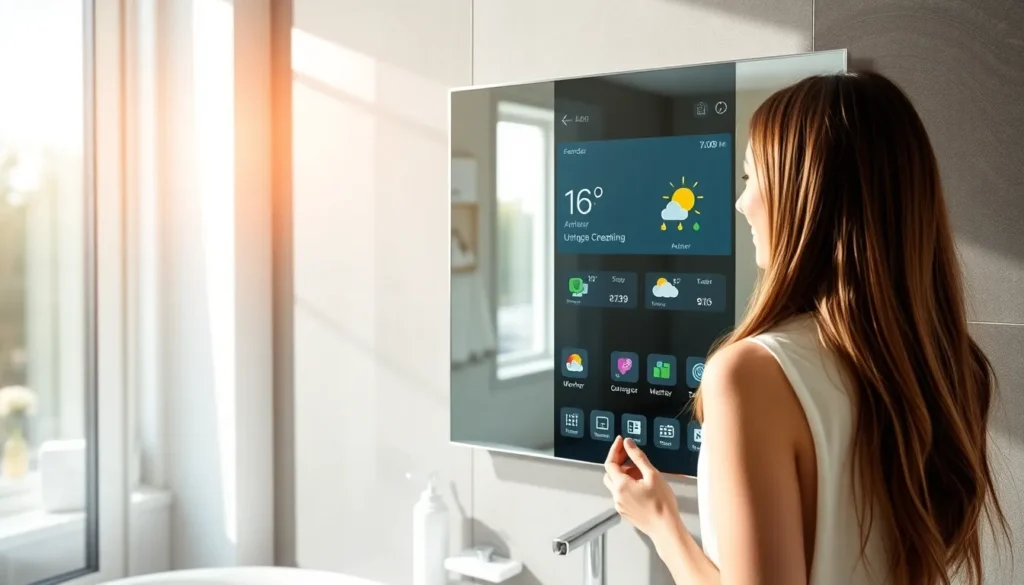
Imagine stepping up to your bathroom mirror and finding more than just your reflection staring back at you. Enter the smart mirror—a dazzling blend of technology and everyday convenience. It’s not just a mirror; it’s like having a personal assistant who won’t judge you for that extra slice of pizza.
Overview Of Smart Mirrors
Smart mirrors serve as advanced devices integrating technology with everyday needs. These mirrors display information such as weather updates, time, and news right in front of users’ eyes. They enhance routines by offering reminders for appointments and tasks, making morning rituals more efficient.
Various smart mirrors support voice commands, allowing users to interact hands-free. Control becomes seamless as people sync their devices, managing calendars and playlists with simple spoken instructions. Many models also include touchscreens, giving users the ability to navigate through apps directly.
Customization plays a vital role in the appeal of smart mirrors. Users can personalize interfaces, choosing the information that displays most relevant to their lifestyles. Features vary widely; some smart mirrors come equipped with fitness tracking, while others focus on beauty applications such as skincare analysis.
Connectivity options enhance usability further. Many smart mirrors can connect to Wi-Fi and Bluetooth, ensuring access to the latest software updates and applications. Integration with smart home systems allows for a cohesive user experience, linking lighting and temperature control with personal habits.
Price points for smart mirrors fluctuate based on features, size, and brand. Budget-friendly options start at around $100 while premium models may reach $1,500 or more. With advancements in technology, smart mirrors are becoming more accessible, making them popular among tech-savvy consumers.
Popularity continues to rise as consumers embrace the convenience offered by smart mirrors. As innovation progresses, additional functionalities may emerge, potentially expanding their role beyond mere vanity checks. Smart mirrors represent a pivotal shift, merging everyday functional objects with cutting-edge technology.
Key Features Of Smart Mirrors

Smart mirrors incorporate advanced technology that transforms ordinary reflections into interactive displays. These features enhance daily routines and make interactions more intuitive.
Display Technology
Display technology plays a crucial role in smart mirrors. Many models use high-definition LCD or OLED screens, providing vibrant visuals that are easy to read. Some mirrors employ anti-glare coatings, ensuring clear visibility under various lighting conditions. Others incorporate gesture recognition, allowing users to interact with the display with simple hand movements. Advanced versions even offer augmented reality features, enabling virtual try-ons for makeup or accessories. Users appreciate this technology as it combines functionality with an appealing design, catering to aesthetic preferences.
Interactive Interface
An interactive interface enhances user engagement with smart mirrors. Touchscreens allow for seamless navigation through apps and features. Voice command functionality provides a hands-free experience, enabling users to access information with natural speech. Customization options let individuals tailor displays to their interests, such as weather forecasts, news headlines, or fitness metrics. Many mirrors support app integration, allowing users to sync calendars and playlists directly. Interactivity thus empowers users, making everyday tasks simpler and more efficient.
Benefits Of Using Smart Mirrors
Smart mirrors offer numerous advantages that enhance everyday life. These devices simplify routines and integrate various technologies seamlessly.
Enhanced Daily Routines
Smart mirrors streamline daily tasks, making them more efficient. They provide real-time information, such as weather updates and calendar reminders, which help users stay organized. Additionally, by incorporating fitness tracking features, smart mirrors support healthier lifestyles. Many users find they can follow skincare routines with guided analysis. Morning rituals become less rushed and more structured, allowing for a positive start to the day.
Integration With Smart Home Devices
Integrating smart mirrors with home automation systems creates a unified experience. Connection to Wi-Fi and Bluetooth allows users to access various apps and control smart devices directly from the mirror. Users can operate lights, adjust thermostats, or monitor security cameras with simple voice commands or touch interactions. Convenience and efficiency increase, as everything needed is available at a glance. These mirrors complement other smart home technologies, enhancing the overall functionality of the environment.
Popular Smart Mirror Models
Smart mirrors come in various models, each offering unique features and functionalities tailored to different user preferences.
Comparison Of Top Brands
Brands like Mmirror and HiMirror showcase advanced technology in their offerings. Mmirror focuses on smart integration with IoT devices while HiMirror emphasizes skincare analysis with high-definition displays. Bluetooth connectivity and voice assistant support are standard features across models. Weighting options, users often find KODAK mirrors to provide a budget-friendly entry point without sacrificing quality. In contrast, Samsung mirrors offer premium design and extensive smart home compatibility, appealing to high-end consumers. Spec sheets reveal differences in display quality, processing speed, and available apps, making detailed comparisons essential for informed decisions.
Customer Reviews And Ratings
Customer feedback highlights the diverse experiences of smart mirror users. Many appreciate the integration with daily routines, citing features like personalized dashboards and hands-free commands as significant benefits. Ratings generally reflect satisfaction with usability and features, with average scores around 4.5 stars across multiple platforms. Some users express concerns regarding setup complexity and connectivity issues. Others emphasize the durability and aesthetics of their chosen models. User-generated content often provides insight into real-life applications, helping potential buyers make informed choices based on shared experiences and challenges.
Future Trends In Smart Mirror Technology
Innovation continues to shape the future of smart mirror technology. Increased integration with artificial intelligence enhances personalization and improves user experiences. These devices could analyze user habits and preferences, offering tailored recommendations for skincare routines or daily schedules.
Voice-assistant capabilities are expected to evolve, allowing more natural conversations with users. This progression may include advanced voice recognition, responding accurately to different accents and tones. As smart mirrors incorporate more intuitive features, hands-free interaction becomes smoother.
Augmented reality will likely play a larger role, especially in fashion and beauty applications. Users can virtually try on outfits or makeup, experiencing a new level of interactivity. Improved display technology, such as microLED, promises even more vibrant images and energy efficiency.
Connectivity could extend beyond current smart home systems. Future models may pair with health monitoring devices, using data from wearables to give real-time health insights right in front of the user. Enhanced security features may also emerge, enabling users to access surveillance feeds or alerts while prepping for the day.
Market trends suggest a rise in affordable options without compromising quality. Emerging brands are focusing on producing smart mirrors that cater to budget-conscious consumers while ensuring advanced functionalities. Consumer preferences may shift towards eco-friendly designs, leading manufacturers to adopt sustainability in their production processes.
User feedback will remain crucial in shaping future models. Manufacturers can fine-tune products based on users’ experiences, addressing common concerns such as connectivity and usability. Overall, the smart mirror technology landscape promises ongoing enhancements that merge daily life with cutting-edge innovations.
Conclusion
Smart mirrors are revolutionizing the way people interact with their daily routines. By seamlessly integrating technology into a familiar object, they provide users with valuable information and enhance efficiency. The ability to customize interfaces and connect with smart home devices makes these mirrors not just functional but essential in modern living.
As advancements continue, smart mirrors are expected to evolve further, offering even more personalized experiences. They represent a significant shift towards smarter, more connected homes, making daily tasks simpler and more enjoyable. With a variety of models available, there’s a smart mirror for every lifestyle and budget, ensuring everyone can benefit from this innovative technology.