Imagine walking into your home and having it greet you like an old friend. The lights flicker on, the thermostat adjusts to your favorite temperature, and your favorite playlist starts playing—all without lifting a finger. Welcome to the world of connected homes, where technology transforms everyday living into a seamless experience that’s as comforting as a warm cup of coffee on a chilly morning.
Overview Of Connected Home Technology
Connected home technology comprises devices and systems that enhance connectivity and automation within living spaces. Various components work together, such as smart appliances, security systems, and home entertainment devices. Each element communicates with others, creating an integrated ecosystem that promotes convenience and efficiency.
Smart lighting systems, for example, allow for remote control and automation based on user preferences. Users can program lights to turn on or off at specific times or control brightness levels through mobile apps. This flexibility contributes to energy savings and improved comfort.
Home security evolves with connected technology, enabling homeowners to monitor their properties from anywhere. Security cameras, motion sensors, and smart locks provide real-time alerts and control through mobile devices. These features increase safety and peace of mind.
Temperature control systems use smart thermostats to optimize heating and cooling. These devices learn user habits and adjust settings accordingly, ensuring consistent comfort while reducing energy consumption. Such technology highlights the importance of efficiency in modern home design.
Connected home technology also includes voice-activated assistants that streamline daily routines. These devices facilitate hands-free control of various systems, from adjusting the thermostat to playing favorite music. Voice recognition enhances user interaction, making the technology more accessible.
As consumers increasingly prioritize smart solutions, connected home technology transforms living spaces, making them more interactive and energy-efficient. Each advancement contributes to a seamless experience that aligns with modern lifestyles. Integration of technology within the home continues to grow, offering a glimpse into the future of residential living.
Key Components Of A Connected Home
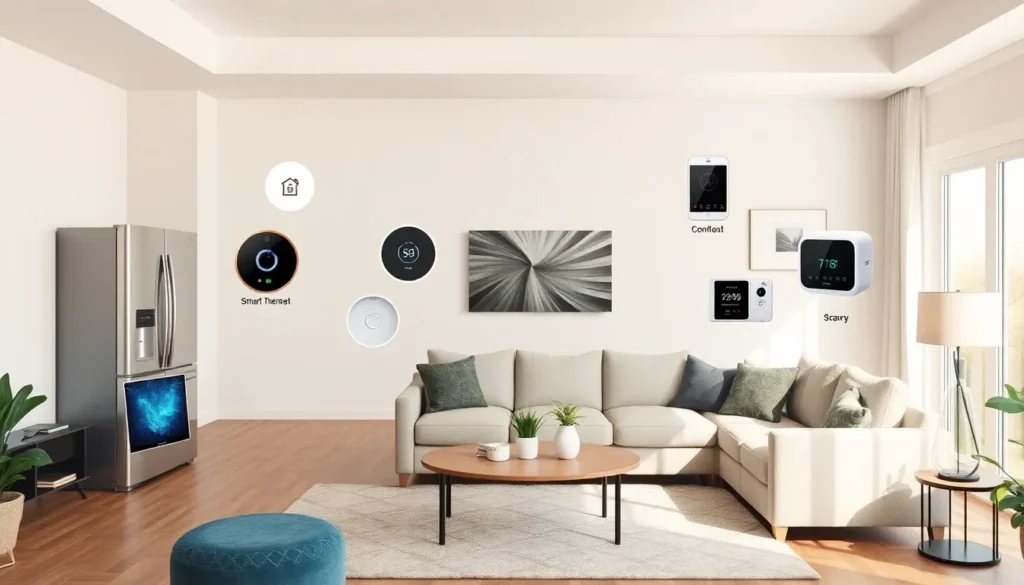
Connected homes leverage a variety of technologies to enhance functionality and comfort. Key components include smart devices and robust connectivity solutions that integrate seamlessly.
Smart Devices
Smart devices play a crucial role in connected homes. They include appliances like smart refrigerators, washing machines, and ovens that respond to user commands. In addition, security cameras and smart locks facilitate enhanced safety and real-time monitoring. Thermostats that learn user habits adjust temperatures automatically, promoting comfort and energy efficiency. Voice assistants enable users to manage devices hands-free, simplifying daily tasks. These smart devices work together, creating a cohesive environment that adapts to individual lifestyles.
Connectivity Solutions
Strong connectivity solutions underpin the function of a connected home. Wi-Fi networks provide the backbone for device communication, enabling seamless interaction. Mesh networks can expand coverage throughout larger spaces to eliminate dead zones. Bluetooth technology connects devices over short distances for quick data transfer. Moreover, low-power wide-area networks support smart sensors over extended ranges, ensuring coverage in diverse settings. By prioritizing secure and reliable connections, homeowners can enjoy uninterrupted service in their automated living spaces.
Benefits Of A Connected Home
A connected home offers numerous advantages that enhance daily living. These benefits include enhanced convenience, improved security, and energy efficiency.
Enhanced Convenience
Automation simplifies everyday tasks. Smart devices manage lighting, temperature, and entertainment, adapting to personal preferences. For instance, homeowners can control their environment remotely through mobile apps or voice commands. Routine adjustments, like setting the thermostat or turning off lights, occur automatically based on schedules. This level of customization allows for smoother transitions throughout the day, reducing stress and improving overall comfort.
Improved Security
Connected homes improve safety through advanced security features. Smart locks provide remote access control, allowing residents to manage entry points from anywhere. Surveillance cameras deliver real-time monitoring, sending alerts directly to smartphones for immediate awareness of any unusual activity. Integration of motion sensors enhances protection by notifying homeowners of potential intruders. Enhanced security leads to greater peace of mind, especially when combined with automated lighting that mimics occupancy when away.
Energy Efficiency
Energy savings significantly increase with connected home technology. Smart thermostats learn user habits, optimizing heating and cooling to match preferences while minimizing unnecessary energy use. Automation encourages efficient appliance operation, reducing waste by scheduling appliances like dishwashers and washing machines during off-peak hours. Enhanced monitoring of energy consumption gives homeowners valuable insights into usage patterns, enabling them to make informed decisions for further savings. Together, these features contribute to lowered utility bills and promote sustainable living.
Challenges And Considerations
Connected homes bring numerous benefits but also present challenges and considerations. Homeowners must navigate these issues to fully enjoy the advantages.
Privacy Concerns
Privacy concerns frequently arise with connected homes. Multiple devices collect vast amounts of personal data, which can pose risks if mismanaged. Data breaches or unauthorized access can lead to sensitive information exposure. Users often worry about their habits and preferences being tracked without consent. Since many connected devices rely on cloud storage, securing this data becomes crucial. Implementing strong passwords and enabling two-factor authentication can mitigate some of these risks, providing a greater sense of security.
Compatibility Issues
Compatibility issues arise as homeowners integrate various connected devices. Different manufacturers may utilize distinct communication protocols, leading to functionality gaps. For instance, a smart thermostat from one brand may not work seamlessly with a smart lighting system from another. Homeowners should research compatibility before purchasing devices to ensure cohesive operation. Utilizing platforms that support multiple protocols can simplify integration. Investing in devices designed for interoperability promotes a more efficient smart home environment, enhancing user experience.
Future Trends In Connected Home Technology
Connected home technology is evolving rapidly, with several trends shaping its future. Artificial intelligence will play a significant role, allowing devices to learn individual preferences and automate daily routines. Voice control systems continue to gain traction, providing users a hands-free way to interact with their environments through natural language.
Sustainable living becomes increasingly important as energy-efficient devices and smart home technologies emerge. Smart appliances reduce energy consumption, while solar energy integration can further decrease utility costs. Enhanced interoperability between devices will rise, enabling seamless communication regardless of brand or protocol, which will simplify user experience.
Data privacy solutions are also gaining attention. Companies are now focusing on robust security measures to protect users’ personal information, addressing growing concerns over data management. Regular software updates will become standard practice, ensuring device security and functionality remain aligned with the latest standards.
Adoption of 5G technology will further revolutionize connected homes. With faster internet speeds and lower latency, smart devices can communicate more effectively, enhancing the overall reliability of automated systems. Smart health monitoring, such as wearable devices integrated with home systems, will gain popularity, allowing users to track their well-being in real-time.
Collaboration among manufacturers will likely increase, as partnerships between tech companies and homebuilders create new solutions. These collaborations will lead to the development of homes designed with smart technology built into their structure, making connectivity easier from the outset. End-users will benefit from an array of products that seamlessly integrate with one another, fostering a more cohesive connected home experience.
With these trends, connected home technology promises to enhance convenience, sustainability, and security significantly in the coming years.
Connected homes represent a significant evolution in how individuals interact with their living spaces. By integrating smart devices and robust connectivity solutions, they offer unparalleled convenience and security. Homeowners can enjoy a seamless lifestyle where automation enhances daily routines and promotes energy efficiency.
As technology continues to advance, the future of connected homes looks promising. Innovations like artificial intelligence and 5G will further enhance user experiences while addressing privacy concerns. The ongoing collaboration between manufacturers and homebuilders will lead to even smarter living environments, making connected homes not just a trend but a fundamental aspect of modern living. Embracing these advancements will pave the way for a more comfortable and sustainable future.