Table of Contents
ToggleFinding tiny brown bugs crawling across your countertop or clustered near a windowsill isn’t just unsettling, it’s a sign that something in your home is attracting them. These pests vary widely, from fabric-munching carpet beetles to pantry-raiding drugstore beetles, and proper identification is the first step toward effective elimination. This guide walks homeowners through spotting the most common culprits, understanding what draws them indoors, and implementing DIY solutions that actually work. With the right approach, most infestations can be handled without calling an exterminator.
Key Takeaways
- Identifying the tiny brown bug in your house is crucial—carpet beetles damage fabrics while drugstore beetles infest pantries, and each requires different treatment approaches.
- Carpet beetle larvae hide in dark spaces like closets and under baseboards, while pantry beetles enter through infested food and can reproduce rapidly with a single female laying up to 100 eggs.
- Deep vacuuming with a HEPA filter, heat-treating fabrics, discarding infested food, and using diatomaceous earth can eliminate most small infestations without professional help.
- Seal entry points with weatherstripping and caulk, store dry goods in airtight containers, and maintain humidity below 50% to prevent future tiny brown bug infestations.
- Monitor treated areas with pheromone traps for 4-6 weeks since beetle life cycles span several months, and consult a pest control professional if infestations persist despite thorough DIY efforts.
How to Identify Common Tiny Brown Bugs in Your Home
Accurate identification matters because treatment methods vary significantly. The two most common tiny brown bugs homeowners encounter are carpet beetles and pantry beetles, both typically measure 1/16 to 1/8 inch long and prefer dark, undisturbed spaces.
Carpet Beetles
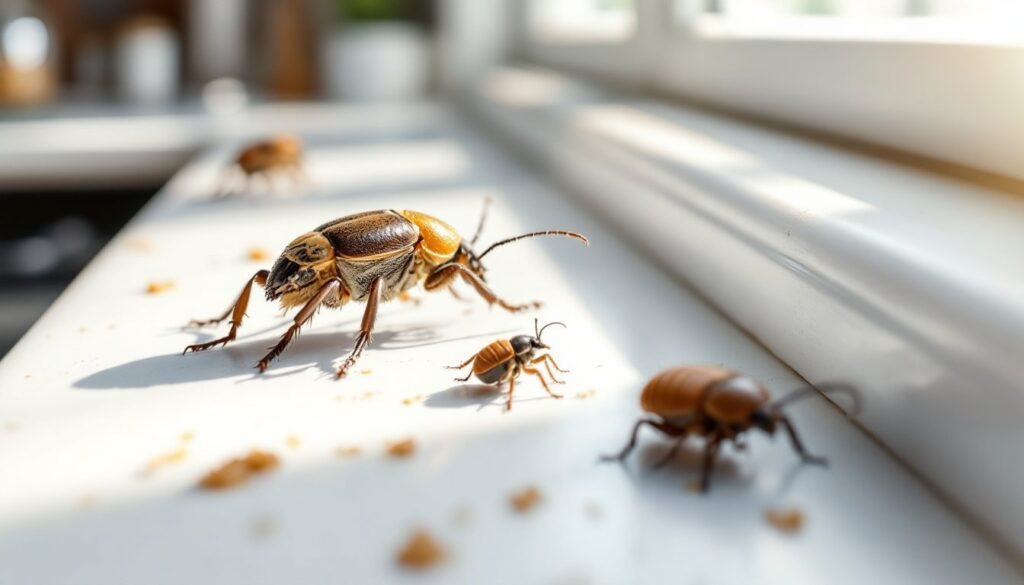
Carpet beetles (Anthrenus species) are oval-shaped insects with mottled brown, white, and yellow scale patterns. Adults measure roughly 1/8 inch and are often spotted near windows in spring, attracted to light as they seek mates. The real damage comes from their larvae, fuzzy, carrot-shaped grubs covered in bristly hairs that feed on natural fibers like wool, silk, feathers, and even pet hair.
Larvae leave behind shed skins and fecal pellets that resemble tiny grains of sand. They prefer dark, undisturbed areas: the backs of closets, under baseboards, along carpet edges, and inside air ducts. If you’re finding small holes in sweaters or noticing threadbare patches on upholstered furniture, carpet beetles are the likely culprit.
To confirm, check for larvae in closets, beneath furniture, and around heating vents. Use a flashlight and vacuum attachment to inspect carpet seams and baseboard gaps.
Drugstore and Cigarette Beetles
Drugstore beetles (Stegobium paniceum) and cigarette beetles (Lasioderma serricorne) are cylindrical, reddish-brown beetles about 1/10 inch long. Both infest stored foods, particularly grains, spices, dried herbs, pet food, and even non-food items like book bindings and dried flowers.
Drugstore beetles have grooved wing covers and antennae with a three-segmented club. Cigarette beetles have smooth wing covers and serrated (saw-like) antennae. Both are strong fliers and are often noticed around pantry shelves or kitchen lights at dusk.
Infested food products may contain small holes in packaging, webbing, or a musty odor. Larvae are white, grub-like, and C-shaped. If you’re finding bugs in your pantry or near dry goods, inspect all stored food containers, even sealed ones, these beetles can chew through cardboard, plastic bags, and foil.
Why Tiny Brown Bugs Are Attracted to Your Home
Understanding attractants helps prevent repeat infestations. Tiny brown bugs don’t invade randomly, they’re drawn to specific conditions and food sources inside your home.
Carpet beetles enter through gaps around windows, doors, and foundation cracks, often hitching rides on cut flowers or secondhand furniture. Once inside, they seek natural fibers and animal-based materials. Homes with wool rugs, down comforters, taxidermy, or stored clothing are prime targets. Poor ventilation in closets and attics creates humid microclimates that larvae thrive in.
Pantry beetles arrive in infested food products purchased from stores or bulk bins. Improper food storage, open bags, cardboard boxes, or containers without airtight seals, allows populations to explode. These beetles reproduce rapidly: a single female can lay up to 100 eggs in favorable conditions.
Other attractants include:
- Pet hair and dander: Accumulations under furniture or in HVAC ducts provide larvae with protein-rich food.
- Bird nests and animal nests: Attic or chimney nests near soffits can harbor carpet beetles that migrate indoors.
- Old books and papers: Drugstore beetles feed on starch-based glues in book bindings.
- Humidity: High moisture levels accelerate beetle development and attract them to basements and crawl spaces.
Sealing entry points with weatherstripping, caulk, or expanding foam reduces access. Regular vacuuming and proper food storage disrupt breeding cycles before infestations establish.
DIY Methods to Get Rid of Tiny Brown Bugs
Most homeowners can eliminate small infestations without professional help. The key is thoroughness, missing even one breeding site allows populations to rebound.
Step 1: Deep Clean and Vacuum
Start with a high-filtration vacuum (HEPA filter preferred) to remove adults, larvae, eggs, and food debris. Focus on:
- Carpet edges and under area rugs
- Upholstered furniture seams and beneath cushions
- Closet floors and shelving
- Baseboards, window sills, and air vents
- Behind and under appliances
Empty the vacuum canister or bag immediately into an outdoor trash bin. Larvae can continue developing inside vacuum bags.
Step 2: Launder and Heat-Treat Fabrics
Wash all infested clothing, linens, and curtains in hot water (130°F minimum) and dry on high heat for at least 30 minutes. For non-washable items like wool coats or delicate upholstery, seal them in black plastic bags and leave in direct sunlight or a hot car (above 120°F) for several hours, or freeze for 72 hours at 0°F or below.
Step 3: Discard Infested Food Products
Inspect every pantry item, even unopened packages. Look for small holes, webbing, or live beetles. Discard anything questionable in sealed plastic bags outside your home. Wipe down shelves with a vinegar-water solution (1:1 ratio) to remove eggs and larvae.
Transfer remaining dry goods to airtight glass or heavy plastic containers with tight-sealing lids. Mason jars or OXO Pop containers work well for grains, pasta, and cereals.
Step 4: Apply Targeted Insecticides (If Needed)
For persistent infestations, use diatomaceous earth (DE) or boric acid powder in cracks, baseboards, and other hiding spots. DE is a non-toxic silica powder that damages insect exoskeletons, causing dehydration. Wear a dust mask and safety goggles during application, DE is a lung irritant.
Alternatively, insecticidal sprays containing pyrethrins can be applied to baseboards and carpet edges. Follow label instructions carefully and keep pets and children away until surfaces dry.
Avoid fogging or bug bombs, they rarely penetrate the hidden areas where larvae develop and can contaminate food surfaces.
Step 5: Monitor and Repeat
Place pheromone traps (available for both carpet beetles and pantry beetles) near suspected areas to monitor activity. Recheck all treated areas weekly for 4-6 weeks. Beetle life cycles can span several months, so vigilance prevents re-infestation.
If infestations persist even though thorough DIY efforts, or if you suspect beetles in wall voids or structural areas, consult a licensed pest control professional. Some infestations require fumigation or specialized treatments.
Preventing Future Infestations in Your Home
Prevention is simpler and cheaper than elimination. A few routine habits dramatically reduce the risk of tiny brown bugs returning.
Seal Entry Points
Inspect weatherstripping around doors and windows annually. Replace worn seals and apply silicone caulk to gaps around utility penetrations, foundation cracks, and where siding meets the foundation. Install door sweeps on exterior doors to close gaps at thresholds.
Repair torn window screens and ensure attic vents have fine mesh screening (1/8-inch hardware cloth) to block insect entry.
Practice Smart Storage
Store woolens, furs, and seasonal clothing in airtight plastic bins or vacuum-sealed bags. Add cedar blocks or lavender sachets as natural repellents, though these alone won’t stop an active infestation.
Keep pantry items in sealed containers and rotate stock regularly. Avoid buying bulk dry goods unless you’ll use them quickly: products sitting unused for months become beetle breeding grounds.
Maintain Cleanliness
Vacuum regularly, especially in low-traffic areas. Clean under furniture, along baseboards, and inside closets at least monthly. Launder or dry-clean stored fabrics before packing them away.
Change HVAC filters every 3 months and have ducts professionally cleaned if you notice excessive dust or pet hair accumulation. Beetles often colonize neglected ductwork.
Manage Humidity
Use dehumidifiers in basements and crawl spaces to keep relative humidity below 50%. High moisture supports beetle development and attracts other pests.
Ensure attic and crawl space ventilation meets local building codes (typically 1 square foot of vent per 150 square feet of space). Proper airflow reduces condensation and discourages nesting.
Inspect Secondhand Items
Before bringing used furniture, rugs, or clothing indoors, inspect thoroughly for signs of beetles. Vacuum or steam-clean items outdoors and consider a precautionary freeze treatment for fabrics.
Remove bird nests from eaves, chimneys, and vents promptly, they’re common sources of carpet beetle infestations. Wear gloves and a mask when handling nests, and seal any gaps that allowed nest construction.
Routine vigilance and basic housekeeping practices keep most beetle problems at bay. If you spot a few bugs even though prevention efforts, act immediately before populations establish.
Conclusion
Tiny brown bugs are a nuisance, but they’re manageable with proper identification and consistent effort. Whether dealing with fabric-destroying carpet beetles or pantry-invading drugstore beetles, the solution lies in thorough cleaning, targeted treatment, and proactive prevention. Most infestations respond well to DIY methods when homeowners address both the visible bugs and their hidden breeding sites. Stay vigilant, seal entry points, and maintain good storage habits to keep your home pest-free.