
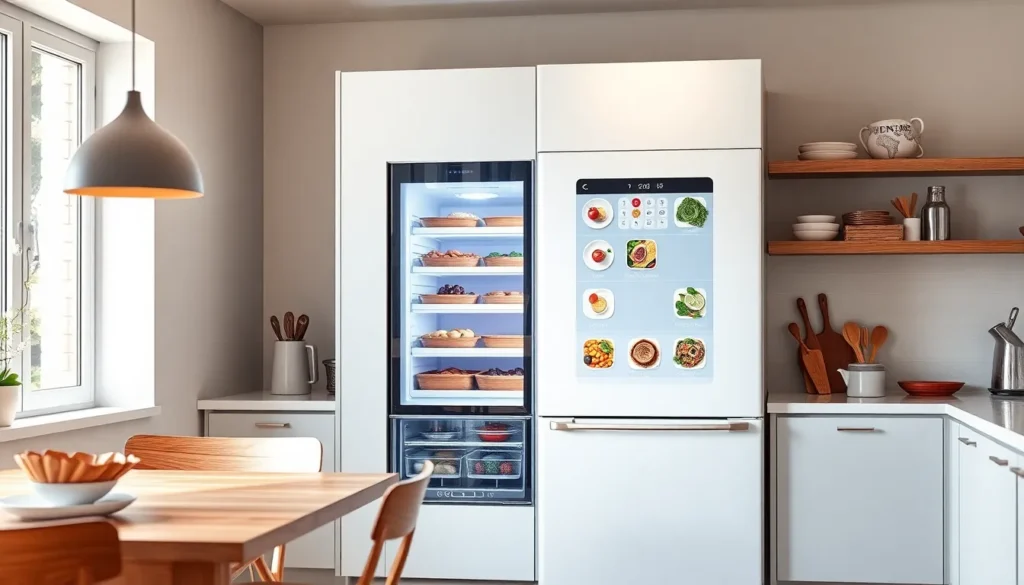
In a world where even toasters are getting smarter, why should refrigerators be left behind? Enter the smart refrigerator, the kitchen wizard that’s more than just a chilly box for leftovers. Imagine a fridge that not only keeps your food fresh but also reminds you when you’re out of milk. It’s like having a personal assistant who doesn’t need coffee breaks!
Overview Of Smart Refrigerators
Smart refrigerators enhance kitchen functionality significantly. They connect to the internet, allowing users to control settings remotely through smartphones or tablets. Users receive notifications for expiration dates, helping reduce food waste. Advanced features also include touchscreens that display recipes and meal planning tools, which simplify meal preparation.
These appliances utilize sensors to monitor inventory levels, alerting users when stocks run low. For example, they can inform users when milk or vegetables are almost depleted. Many smart refrigerators also support voice commands, integrating with virtual assistants for hands-free operation.
With built-in cameras, users can view their fridge contents from anywhere, making grocery shopping efficient. Some models even allow users to create shopping lists directly from the refrigerator’s interface. Energy efficiency is another key benefit, as many smart refrigerators analyze usage patterns to optimize performance and reduce electricity consumption.
Integration with home automation systems is common, enabling synchronized operations with other smart home devices. For instance, users can adjust kitchen lighting or oven settings from the refrigerator itself. Overall, smart refrigerators represent a leap forward in kitchen technology, transforming mundane food storage into an interactive experience.
Key Features Of Smart Refrigerators
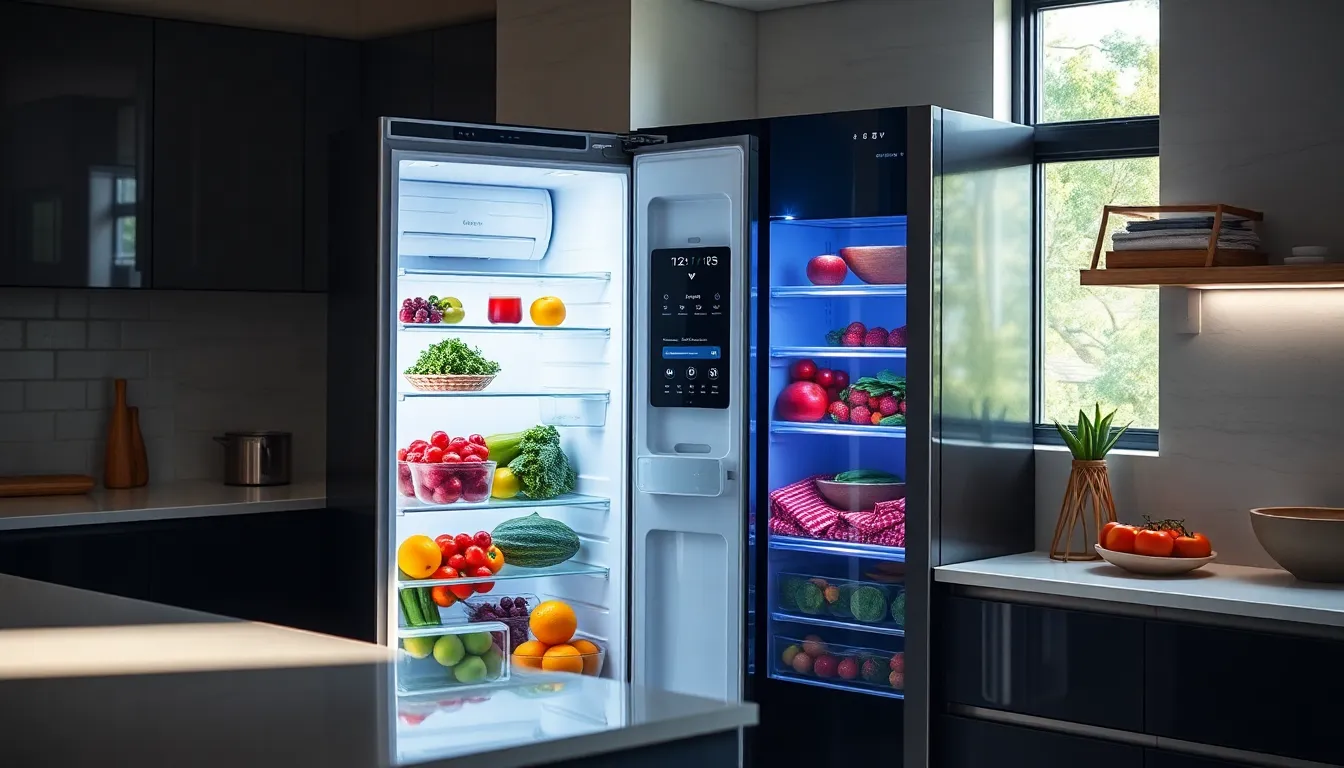
Smart refrigerators boast a range of advanced features that enhance food storage and kitchen management. Users appreciate the ability to control appliances remotely and receive useful notifications.
Connectivity and Integration
Connectivity plays a crucial role in smart refrigerators. They seamlessly connect to Wi-Fi networks, allowing access through mobile apps. Integration with other smart home devices enhances overall kitchen automation. Users can adjust temperatures and settings from their smartphones. Voice command capabilities make operations even easier, providing hands-free convenience. Many models also support smart assistants, enabling voice-activated tasks. Increased connectivity leads to improved user experiences in managing kitchen tasks.
Energy Efficiency
Energy efficiency is a significant advantage of smart refrigerators. These appliances analyze energy consumption patterns to optimize performance. Smart technology helps reduce electricity costs while maintaining ideal conditions for food storage. Many models feature energy-saving modes, conserving power when not in active use. Users can monitor energy consumption via apps, providing insights for better usage. Over time, the energy conservation benefits contribute to a smaller carbon footprint. Enhanced energy efficiency aligns with a growing focus on sustainability in household appliances.
Food Management
Smart refrigerators significantly improve food management. They utilize sensors to monitor inventory levels, notifying users when items are running low. Built-in cameras provide a convenient way to check food supplies remotely. Meal planning tools displayed on touchscreens help users create shopping lists efficiently. Expiration notifications reduce food waste, allowing for proactive management of perishable items. Enhanced food organization features streamline cooking and shopping experiences. Overall, these appliances transform kitchen practices into a more efficient and enjoyable process.
Benefits Of Using Smart Refrigerators
Smart refrigerators offer numerous benefits that enhance kitchen efficiency and improve food management.
Convenience and Time-Saving
Remote access grants users the ability to check their fridge contents anywhere. Smart refrigerators send alerts, notifying when items are running low. Voice command functionality simplifies tasks, enabling hands-free operation. Touchscreens display recipes, reducing the time spent searching for meal ideas. Inventory tracking supports efficient grocery shopping by creating shopping lists directly from stored items. Users can plan meals better with this integrated technology, saving valuable time during busy weeks.
Enhanced Food Preservation
Sensors within smart refrigerators monitor temperature and humidity levels. These adjustments help maintain ideal conditions, extending the life of perishable goods. Expiration date notifications provide timely reminders to consume items before they spoil. Built-in cameras allow users to view contents without opening the door, minimizing temperature fluctuations. This feature supports proactive food management and reduces waste. Smart technology also analyzes usage patterns, optimizing energy consumption while keeping food fresh. Improved preservation methods contribute to a more sustainable kitchen environment.
Popular Smart Refrigerator Models
Numerous smart refrigerator models stand out in today’s market, each packing unique features. Samsung’s Family Hub offers a touchscreen interface, integrated cameras, and voice control, enhancing user interaction and convenience. LG’s InstaView allows users to knock twice on the glass panel to illuminate the interior, making it easy to check inventory without opening the door.
Whirlpool’s Smart French Door Refrigerator includes adaptive technology to monitor food freshness and provide alerts for low-stock items. Bosch’s 800 Series excels in energy efficiency, featuring Home Connect technology that integrates seamlessly with other smart devices.
A notable option, GE’s Profile Series, includes a hands-free fill feature that dispenses water in precise amounts, improving functionality for busy kitchens. This model also records expiration dates automatically, further simplifying food management.
Hisense’s Smart Refrigerator combines affordability with smart features like remote access management through a mobile app. Frigidaire’s Gallery Series offers robust voice control capabilities, allowing users to make adjustments effortlessly while multitasking.
These models highlight advancements in kitchen technology, focusing on user-friendly experiences that support efficient food management. Users find these appliances not only innovative but essential in creating a modern kitchen environment.
Conclusion
Smart refrigerators are redefining the kitchen experience by merging technology with everyday tasks. These appliances not only enhance food preservation but also streamline meal planning and grocery shopping. With features like remote access and voice commands, they offer unparalleled convenience.
The integration of smart technology promotes energy efficiency and sustainability, allowing users to manage their food inventory effectively. As the market continues to evolve, various models cater to diverse needs, ensuring there’s a smart refrigerator for every household. Embracing this innovation leads to a more organized and efficient kitchen, making cooking and food management a breeze.


